WorkSync Services · SCADA Modernization
Fewer platforms, live data in any browser, and a team that has run the systems it migrates
For VP Operations, Control Room Manager, VP OT, Measurement
The situation
Why operators are looking at this now
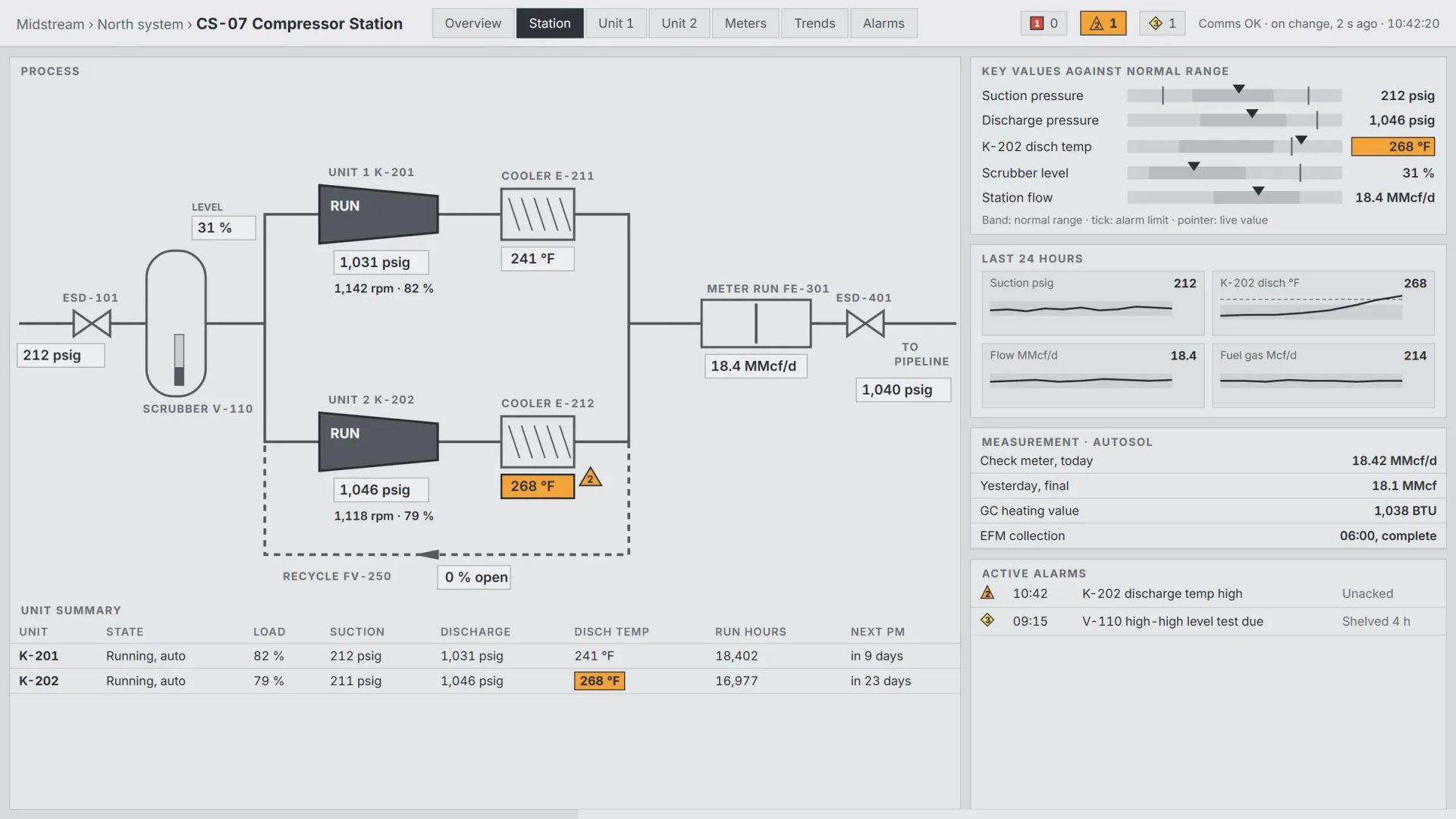
Across the industry the pattern is the same. Acquisitions arrive on a different SCADA platform than the one in the office. Older HMI releases and the Windows servers under them leave support. Vendors move from perpetual licenses to per-user subscriptions. Operators pay outside integrators to keep two or three systems alive, while the field still waits on a poll that runs every 15 to 60 minutes on a typical older system and on-call staff cannot see a station from a phone.
The decision is rarely “which platform is best.” It is which path gets the business to fewer platforms at the lowest cost and risk, without touching measurement or the field.
Three platforms after a deal.
Every acquisition brings its own SCADA. Convergence has to be planned, or it never happens.
Support that leaves on a date.
Older releases and server operating systems end support on published dates. Staying is also a project.
Screens stuck on the desktop.
Operators want alarms on a phone and live data, without a second seat license for every person who needs a screen.
What we do
What WorkSync does
- 01
Platform decision and budgetary plan
Typical size: Two to four weeks
A short, honest comparison of the paths the business is weighing, scored against operations’ needs: license cost as the business grows, usability, browser and mobile, live data, engineering upkeep, hosting, measurement and the number of platforms left standing. A budgetary plan by phase, a ten-year cost model against doing nothing, and a page that lists every assumption for discovery to confirm. Delivered in weeks, presentable by the client to its own leadership.
- 02
Ignition migrations
Typical size: One operating year for a regional midstream system
Moving midstream, plant and CCS applications from earlier HMI and SCADA platforms to Ignition Perspective, hosted in the client’s cloud or on site. Templates and a screen library first, then site-by-site cutover in waves, each site running old and new side by side until its operators sign off. Measurement and field communications are left where they are.
- 03
AVEVA and CygNet upgrades
Typical size: Weeks to a few months
Version upgrades, lifecycle moves and web-client work on the platforms the client already owns, including stepped upgrades on older releases, historian migration and licensing clean-up. The same team that migrates off a platform knows how to keep it healthy where it should stay.
- 04
MQTT and live-data conversions
Typical size: Weeks per system
From polling to report by exception: Sparkplug publishing at the edge or the server, broker design, store-and-forward across radio drops, and the subscriber side in the SCADA layer. Delivered with the measurement path untouched, so the flow computers and the measurement system of record carry on as before.
- 05
Control system design and advanced process control
Typical size: Scoped per plant
Control system design for midstream, upstream and processing plants, from P&ID-level screens to alarm philosophy, and advanced process control where a plant or pipeline gains from it.
How it runs
How a migration runs
- 01
Discover and design
Inventory, architecture, screen standards shown in two styles, and the cutover plan, agreed before any site moves. - 02
Automated migration tooling
Software converts and tests the repeatable work. Engineers spend their time on screens and judgment. Each site goes faster and comes out consistent. - 03
Two-week sprints with operations
Operators see working screens every two weeks, change them, and sign off before a site moves. - 04
Cutover in waves
Each site runs old and new side by side until its operators sign off. Every cutover has a rehearsed rollback, in a window operations picks. No site goes dark. - 05
Hand over
Templates, standards and code belong to the client, with its engineers trained alongside. Configuration under version control, development, test and production environments, and scripted deployment, so the client can keep changing the system safely after WorkSync leaves.
Step 02, spelled out
What the tooling converts and tests, and what stays with an engineer
What the client keeps regardless of WorkSync
- Licenses in its own name
- Every screen and template in its own repository
- A standard platform any certified firm can support
- Payment at milestones, never ahead of delivered work
What users notice
What the people who run the system notice
Operators and on-call
- The same screens on a phone, tablet, panel PC or laptop, with one sign-in
- The right on-call person is texted, called or emailed, and it escalates if nobody acknowledges
- Screens that stay gray until something is abnormal, so the alarm stands out
- One map: routes, sites, live alarms, radar and lightning layers
- Trend any point and export it in seconds
Technicians and measurement
- Station status before the drive: comm state, last report, battery, on one page
- A tabular meter page with drill-down trends and export
- Scheduled reports that arrive by email
- An audit page: who wrote which setpoint, when, from where
Engineers and supervisors
- A new site from a template in hours; the next acquisition joins the same way
- Unlimited users and sessions; everyone who needs a screen gets one
- History open to the business intelligence tools the client already uses
- Development, test and production under version control, with one-step rollback
Capabilities of the Ignition platform as the vendor documents them (Ignition 8.3), delivered in the client’s own configuration. Not a WorkSync measurement.
Experience
The team has done each piece of this before
A full field onto Ignition.
At Maverick Natural Resources: a CO2 recovery plant, a gas pipeline network, liquids pipelines and injection wells were moved onto Ignition, replacing an earlier-generation DCS and HMI, with Ignition layered over CygNet upstream.
Live data, field to screen.
At a major US refined products pipeline: field drivers, Autosol, an MQTT broker and Ignition moved the SCADA layer from polling to report by exception.
AVEVA from the inside.
An AVEVA Enterprise SCADA upgrade for a pipeline operator: the vendor’s licensing, support and data access, first hand.
One layer over many systems.
Enterprise Ignition over several CygNet versions and other SCADA systems, feeding a cloud analytics platform: one low-cost view, stored history and an analytics pipeline.
Projects led by WorkSync’s team, at WorkSync and in prior operator roles. References on request.
Platforms
Platforms the team works on
The measurement record stays in the client’s measurement system in every engagement. WorkSync changes the screens and the SCADA layer, not the custody chain.
Named factually, as the platforms we migrate to and upgrade
- Ignition (Perspective, Edge, MQTT Engine)
- AVEVA (InTouch, System Platform, Historian, Enterprise SCADA)
- CygNet
- Autosol ACM and eACM
- MQTT Sparkplug B
- FlowCal and ProCount interfaces
- AWS and on-site hosting
Where the WorkSync platform fits
Where the WorkSync platform fits
A modern SCADA layer is where the data becomes live. WellOPS turns that data into a prioritized daily plan for operators, and FlowSync keeps hydraulic models of the gathering system current from it. Clients can take the migration alone, or use it as the foundation both products build on.
How it starts
Start with the platform review
Two to four weeks, a recommendation the client can present to its own leadership, a budgetary plan by phase, and every assumption listed for discovery to confirm. If the answer is to stay where you are, the review says so.
The rest of the practice
- OperationsField operationsEfficiency, downtime and artificial lift: the work the crews do every day, chosen by what it is worth.
- Engineering and SafetySafety programA safety management system the field owns: hazards assessed with the crew, competency per task, leading indicators.
- Engineering and SafetyLeak detection and integrityLeak detection and integrity management designed around the instrumentation you have, with the evidence trail built in.
- Engineering and SafetyEngineering capacityRecurring engineering deliverables drafted from your own data, so the engineer reviews and issues instead of gathering.
- Technology, Data and AIOperational dataThe integration inventory, one canonical model, governed tables in your own cloud, and the runbook to own them.
- MethodWhat an engagement looks likeThe four phases, what we do, what your team does, and what lands at the end of each one.
Questions
Five questions operators ask first
Does a migration change measurement or custody records?
What happens to field communications?
How small can the engagement be?
Who supports the system afterwards?
Do you work on platforms you are not migrating to?
The claim record