A CMMS that knows what a well is worth.
WorkSync has the easiest to configure and most meaningful equipment maintenance module in upstream. Every work order is priced on production impact, cost, and risk, ranked against every other job in the field, and closed with its ticket and its accrual.
“…a lot of new initiatives, including optimizing artificial lift, real-time facility optimization, a new approach to ops and maintenance through an asset tiering lens.”
CFO, supermajor · Q2 2026 earnings callThe work that never reaches the CMMS is the work that matters.
Plunger changes, stuffing box greasing, meter calibrations, the requests that arrive by text. Upstream runs thousands of assets with wildly variable value, so the module is built to capture all of it: if a field team member knows the equipment is there, they can log against it. Every request gets an origin, a priority, and an outcome, including the ones that used to live in a group chat.
A CMMS built for a plant knows assets and work orders. It carries no view of the fact that Well 233H is down $5,100 a day while Route 6’s inspection can wait a week, so maintenance gets scheduled by calendar and by whoever asked loudest, and the month-end accrual becomes a scavenger hunt. WorkSync prices the work order before it schedules it.
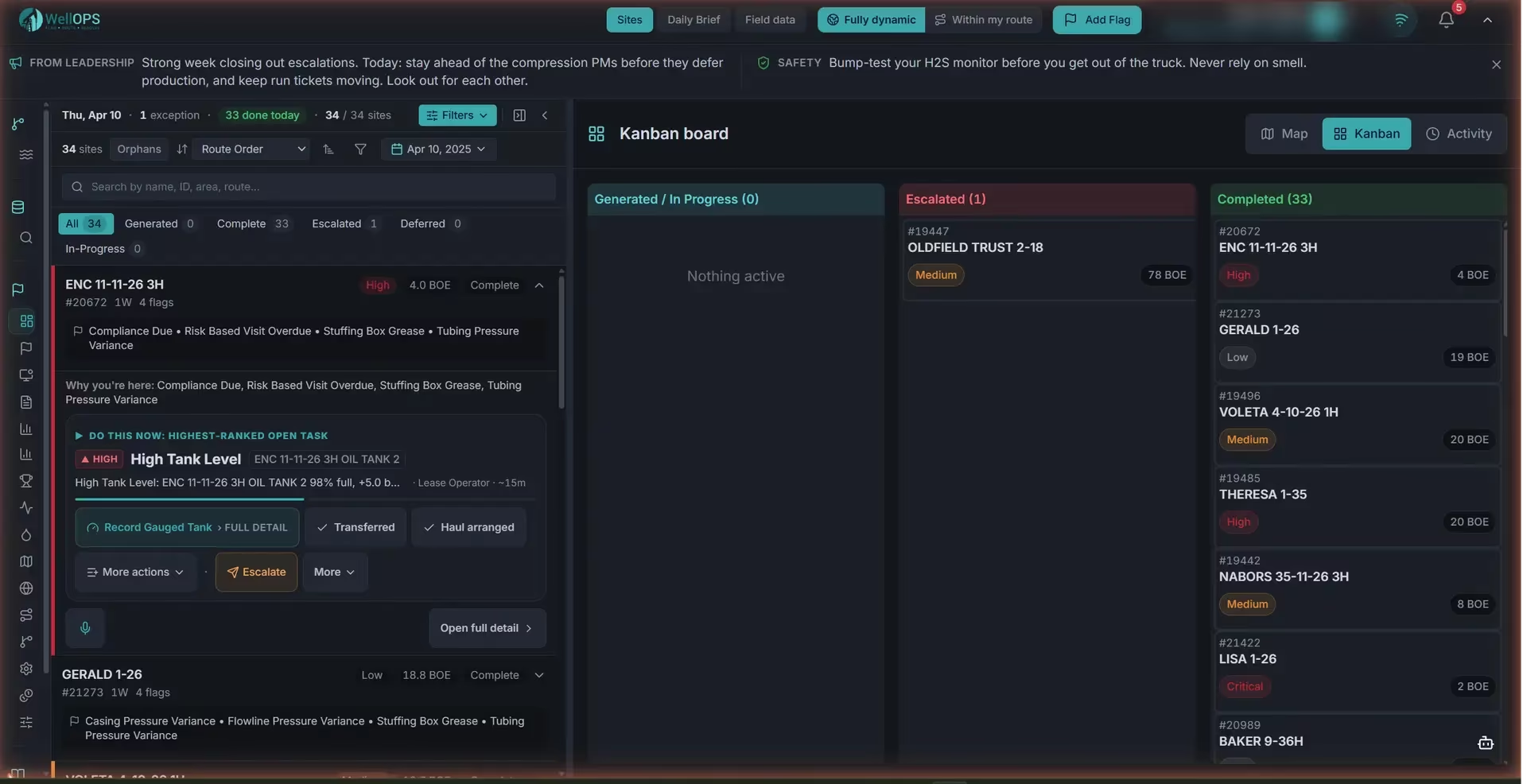
WellOPS is CMMS + Prioritization Engine + Work Management + Field Data Capture + Accruals in one platform, built only for production operations. Break/fix and preventative maintenance live in one value-ranked queue: condition-based triggers and PM schedules create the work, the engine prices it on deferred production and failure cost, the field executes from a ranked plan, and the accrual is booked with the work, not at month-end. Cost is visible on the day it is incurred rather than at close.
Pull is quick. Push is where the care goes. Read-only connections to your historian, EAM, and production accounting stand up in days. Production accounting was never built to run the day: allocation, JIB, severance and royalty stay exact and stay authoritative, and this layer reads from them and answers the run-the-day questions on its own. Write-back is earned, staged and reconciled, when you decide you want it. See the connector and write-back model or the full inventory of systems we connect to.
Work orders, ranked by what the well is worth: break/fix and PMs priced in $/day. Illustrative data.
Configured, not built
Six things you configure. None of them is a science project.
Configuration is where maintenance software usually goes to die. This module is designed the opposite way: the setup is a set of decisions you already have opinions about, and changing your mind later is a session rather than a project.
Equipment, without a perfect hierarchy
Assets are captured as classes with the attributes that matter for the work. Missing parents, duplicated tags, and unclassified equipment are reconciled in the background while work keeps flowing, so the maintenance program starts before the data project finishes.
Your thresholds and your priorities
You set the deviation bands, the priority weights, and the visit cadence per area, per lift type, and per tier. The engine ranks inside your rules, which is what lets a decentralized organization run different strategies per region on one platform.
PM rules by class and by condition
Calendar, runtime, cycle count, or a condition trigger from surveillance. A rule is written once against a class and inherits to every asset in it, so a fleet-wide change to a PM interval is one edit rather than a bulk import.
Deadlines and value, separately
Regulatory deadlines are absolute where the regulator sets them and the module treats them that way. Everywhere else value orders the queue, so the same job on a high value well outranks it on a low-rate one.
Roles, qualifications, and escalation
Who can close what, which qualification a job requires, and who a flag escalates to are defined once and then enforced in the routing, so the plan a crew receives is a plan that crew is allowed to work.
Changes land in minutes
When the strategy changes, the configuration changes with it in the same sitting, and the next morning plan reflects it. There is one path from a decision in a meeting to a different day in the truck.
From trigger to accrual
What a work order does between the moment it exists and the moment it costs.
Meaningful means the work order carries its economics the whole way. Five steps, and the cost lands where the work happened.
The trigger
A PM schedule, a condition-based rule, an exception from surveillance, or a request a field team member raises at the wellhead. All four create the same object, so the informal work is finally in the same system as the scheduled work.
The price
Deferred production if the job waits, failure cost if the equipment runs to failure, and the safety and regulatory exposure it carries, resolved to dollars per day against your price deck and your interest.
The rank and the stop
Break/fix and PMs compete on one ruler. The site stop is the unit of optimization, so the greasing job rides along with the pull that was already going to that pad and earns no truck roll of its own.
The close
One screen at the wellhead, gloves on, online or offline. Parts, labor, hours, readings, and the failure code are captured once, against the equipment they belong to, at the point of work rather than at shift end.
The accrual
Booked with the work, not at month-end. Cost posts against the well and the equipment as the job closes, so the LOE picture assembles itself out of the work and repeat failures in the fleet become visible without a data project.
What operators get. In this order.
Downtime Reduction
The module ranks break/fix and PMs on one ruler, so the work order that stops a producer outranks the same job on a low-rate well.
Optimal Liquid Management
Tank gauging, hauling calls, and the equipment that moves liquid become priced work orders in the same queue as everything else.
Proactive Risk Management
Regulatory deadlines stay absolute where the regulator sets them. Everywhere else, permit-gated and integrity work carries its risk into the same ranking as production work.
The Full Picture of Value Sinks
Parts, labor, and repeat failures post against the well and the equipment they belong to, so the LOE picture assembles itself out of the work.
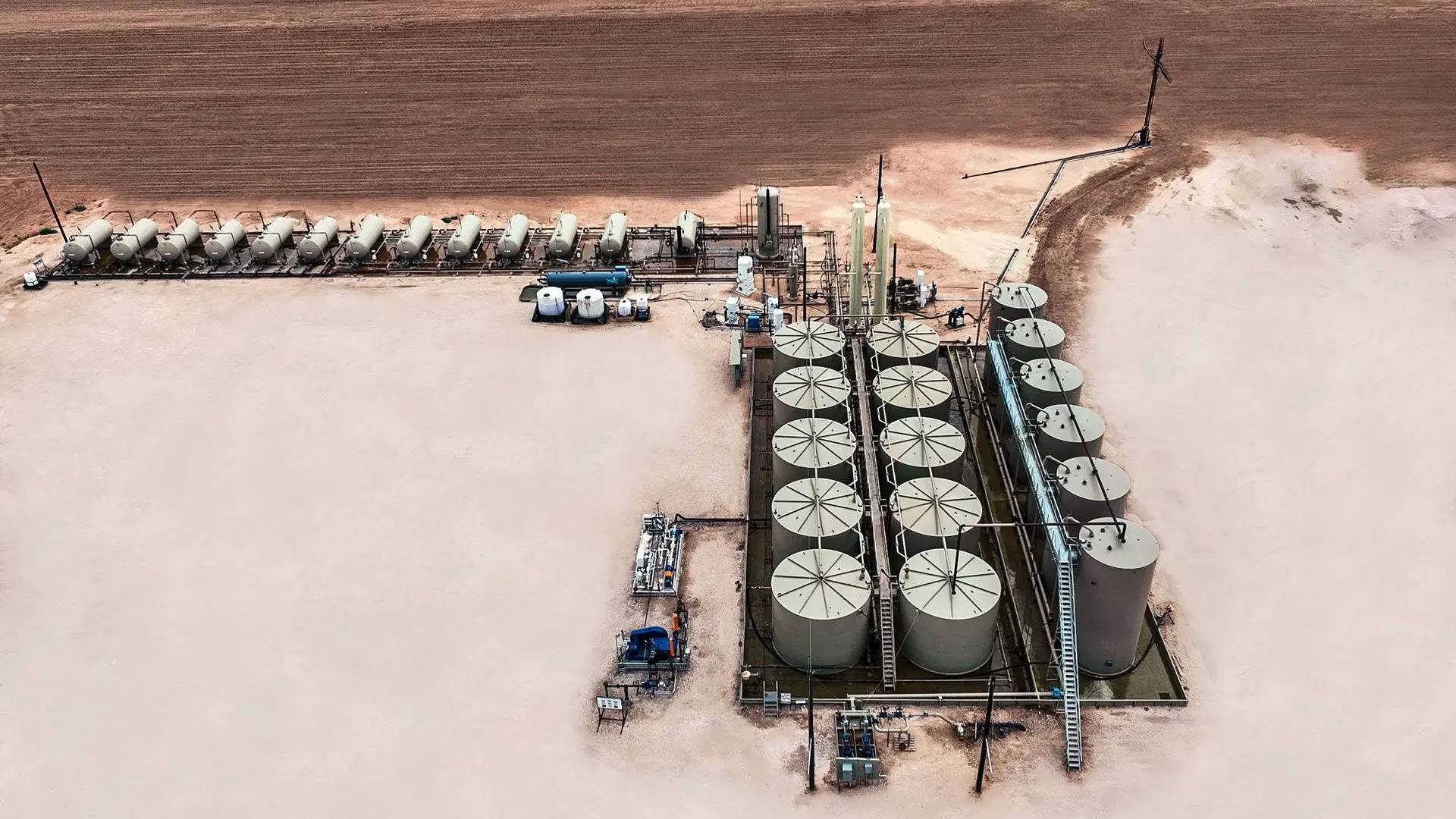
Maintenance worth doing first, visible from the field.
Built to work with your lift program, your operations center, and the platform underneath
Your lift optimization, executed
Rod pump, ESP, and gas lift optimizers recommend. WorkSync prices each recommendation on deferment and failure cost, ranks it against everything else in the field, routes it to the right crew, and books the accrual with the work.
See the artificial lift story →Your remote operations center, connected to the field
The control room and the field share one ranked queue, live in both directions. The center re-prioritizes and the cab sees it in seconds; the field closes work and the center sees status, downtime recovered, and cost.
See the remote operations story →The platform underneath
Five components, one ranked work loop: the data layer, the engine that prices the work, equipment and safety management, and the accrual that closes with the job.
Walk the five components →Equipment management, in detail
How light configuration, deadline-versus-value scheduling, and the site stop as the unit of optimization keep a grease gun from earning its own truck roll.
Read the equipment management mechanism →How WorkSync fits in
Your systems flag it. WorkSync prices it, ranks it, and routes it: routeless, AI-driven operations that put every field team member on the highest-value work.
Your systems
WellOPS
Your field team
The support that keeps your field equipment running. Driven by one ranked queue, with a UX field teams love: built for the cab, offline-capable, and held to a design standard of under 20 minutes a day of software per field team member.
Before you buy
What a maintenance organization asks before it signs.
How do we justify this internally?
Build the case from a method rather than a projection. First, you and your controller pick one operating metric and write it down before anything is connected: cash flow per BOE, operating cost per well, drive miles, or TRIR. Second, run your own well count, crew count, and drive times through the route economics calculator on this site, which puts a dollar figure on a day of your field capacity using your inputs rather than ours. Third, run the four-week pilot on one field against that single agreed metric, with the baseline set in week zero, so the business case is measured on your wells. The Impact Guarantee carries the commercial risk while that happens: license fees only when the metrics move. What reaches your approver is your own baseline and your own delta, which is the only version of the number that survives a finance review.
Run the route economics calculator on your numbers →What training does the field need before the first shift?
The app is built for a truck cab at 6 AM in gloves: one screen at a time, offline capable, and it syncs when signal returns. A field team member opens it to a day that is already assembled and already in order, so the first shift is the training. Capture happens at the wellhead, by voice or in a couple of taps, rather than at shift end, and Willie walks a person through a JSA by voice. Every stop carries the reason it is ranked where it is, and any stop can be resequenced or skipped in one tap with a reason code, which keeps local knowledge in charge of the day. The rollout is gated rather than dated: flags tune against the field's own judgment first, and the ranked plan goes into a truck when the crews agree the ranking is right. The measure that matters is whether the plan survives contact with the field, and establishing that on your own crews is what the four weeks are for.
See what the field app asks for →See your wells, ranked by dollars, tomorrow morning.
Bring one field’s data. We’ll show you the ranked plan your crew would have run today, and what it was worth.
See Your Wells Ranked