Why WorkSync
You’re already paying for the data. Are you getting the decision?
The gap
Every system in your stack does its job.
- SCADA detects.
A pressure drop, a rate deviation, a threshold breach, surfaced in seconds. That is exactly what it is for.
Detection is not a decision.
- CMMS tracks.
Work orders, PM schedules, equipment history, carried through to completion. The record keeps itself.
A backlog is not a ranking.
- BI reports.
Yesterday, rolled up, charted, and delivered to the morning meeting. Everyone sees the same picture.
A report is not a route.
- The spreadsheet prioritizes manually.
One experienced person reads all of the above and ranks the day by hand, every morning, from memory and judgment.
Hand-built priority covers one screen of wells, expires by mid-shift, and retires with its author.
- WorkSync prices, prioritizes, routes, and learns.
- Every open item priced in dollars per day, ranked against every other job in the field, routed into each crew member’s day, and every close-out feeding the next ranking. The systems above stay the systems of record. WellOPS turns what they already know into the decision they were never built to make.
Evaluating the category pattern by pattern? The evaluation criteria and buyer checklist live in the guide to choosing pump by priority software.
The other ways operators answer the gap
- 01
Manual field coordination
Texts and radio move requests fast, and they leave nothing behind. Work that arrives by text message is work that never happened, as far as the record is concerned. Every request should have an origin, a priority, and an outcome. - 02
Internal development
Some operators build the layer themselves, and the largest have. The first dashboard is the easy part. The parts that never end are drift detection, retraining, constraint maintenance, and the close-out feedback loop. We published the build-vs-buy math rather than arguing it.Should we build it in-house? → - 03
Doing nothing
The current stack keeps detecting, tracking, and reporting, and the morning stays manual. Meanwhile the ranking of an operator that feeds outcomes back accumulates calibration a waiting field never gets. The gap widens every quarter.
The consequence
What it costs to stop at detection
- 01
The queue cannot tell a nuisance from a production loss.
A low-rate well alarms with the same color, row height, and sound as your highest cash flow producer, so the morning is triaged by memory, proximity, and instinct. Past roughly a dozen items, an exception queue stops being a work list and becomes background noise. - 02
The automation spend never reaches the cash flow line.
SCADA is in, alarms fire, models run, and the morning still starts with a spreadsheet. An alert that never becomes a prioritized stop is just noise with a timestamp. You are not missing data. You are missing the day. - 03
An hour down is not the same hour everywhere.
With gas realizing pennies and oil realizing dollars, downtime that rolls up in BOE hides the revenue at risk. A field plan that cannot see the difference spends crews on the wrong wells, and the deferred production compounds daily.
From recent operator earnings calls
Executives are already promising this on earnings calls.
“…moving to a pump-by-exception company, a lot more automation.”
COO, large Permian operator · Q2 2026 earnings call
“…transitioned approximately 40% of our onshore production to routeless operations.”
CEO, large US independent · Q2 2025 earnings call
“…the remote operating capability of our Operations Control Center… optimize artificial lift parameters, reduce downtime.”
COO, multi-basin operator · Q2 2026 earnings call
The commitments are public. Detection alone does not deliver them, and neither does a report. Keeping these promises takes the layer that turns data into a ranked, routed, learning field day. That layer is the platform.
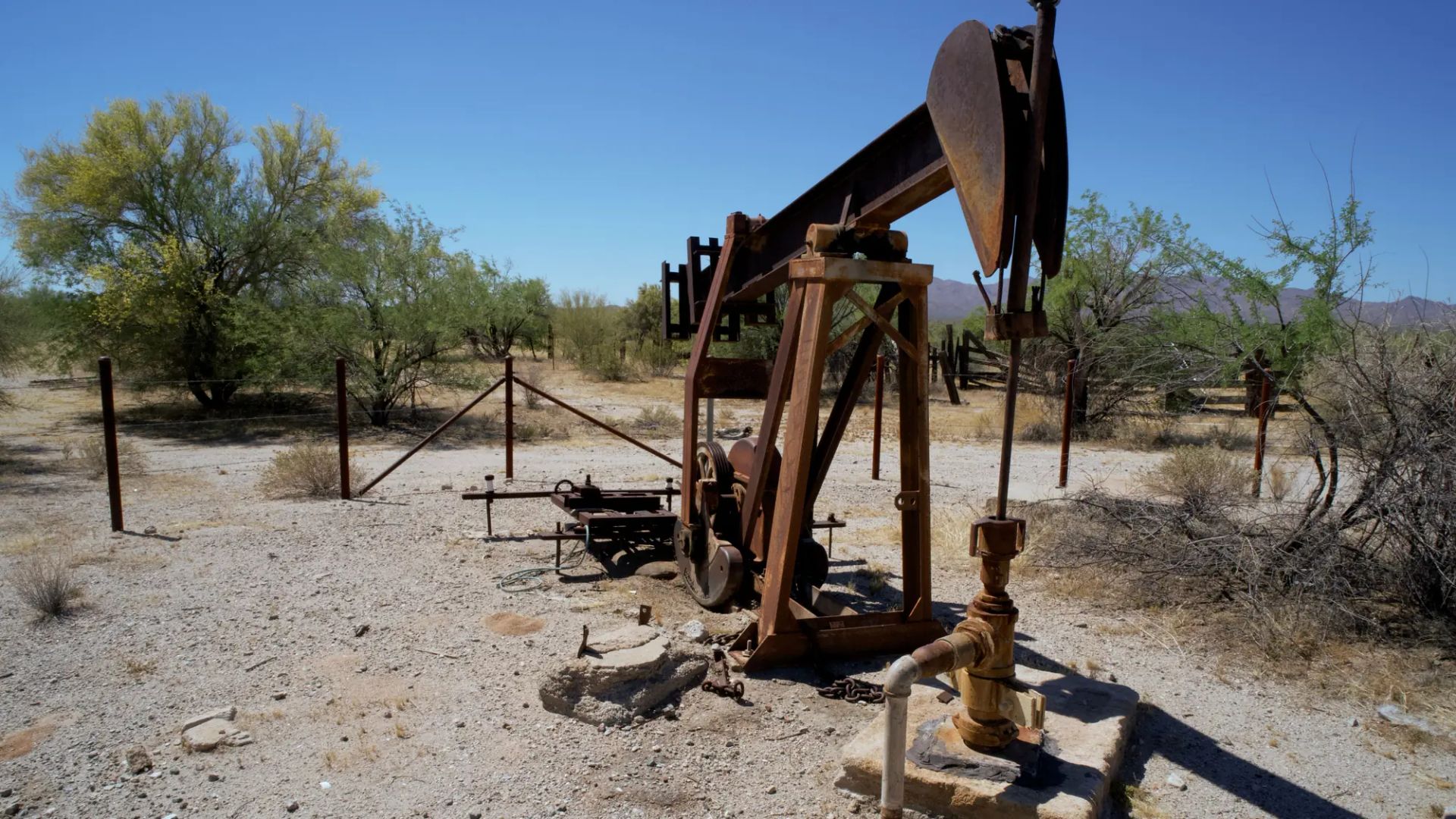
The most sophisticated prioritization engine
What the decision layer does all day
- 01
Flag
Per-well models flag deviation from what each well should be doing this week, not from a threshold set last year. - 02
Price
Every flag is priced in dollars per day: production at risk, commodity price, working interest, lifting cost. - 03
Rank
Every open item is ranked against every other job in the field, in one queue that can settle the morning argument. - 04
Route
Ranked work becomes each crew member’s routed day, built around qualifications, equipment, geography, and hours of service. - 05
Execute
Work is recorded at the wellhead. The close-out books the ticket and the accrual with the work itself. - 06
Learn
Every outcome feeds the next ranking. Scoring accuracy, false-alarm rates, and routing improve measurably each week.
What is different
What WorkSync does differently
- 01
Per-well ML models, learned individually
Not one-size-fits-all thresholds. Per-well models learn seasonal patterns, decline curves, and post-workover behavior so that "normal" is defined by the well, not a spreadsheet. - 02
Every task scored by dollar impact
Production at risk, commodity price, working interest, lifting costs, and trend trajectory, all combined into a single economic score so you always know what matters most. - 03
Complete crew work plans
Not just a ranked list. Full daily plans built around crew qualifications, equipment, geography, driving time, and hours-of-service constraints. - 04
Real-time re-optimization
When a new issue emerges mid-shift, the system re-ranks and re-routes in minutes, not a static morning plan that is outdated by 10 AM. - 05
Predictive: days of advance warning
Pattern recognition across failure histories identifies equipment degradation days before failure. Fix it before it breaks. - 06
Continuous learning
Every field outcome feeds back into the models, so scoring accuracy, false-alarm rates and routing efficiency improve week over week rather than holding still.
Are your best people working on your most valuable work today?
Side by side
Where WellOPS differs from the stack you run today
Where it came from
Why we could build this when others could not
- 01
Born inside an operator
Built by the team that ran the field, then boosted by modern AI and the collapse in the cost of connecting the oil field. The build environment the majors never had. - 02
One system, three lenses
The financial, engineering, and operational lenses combined in one system, coupled with a deep understanding of how the business actually operates. The combination is the product. - 03
Product beats bespoke at every scale
Our up-market case is a cost-structure argument, not just references: a productized platform is far more efficient than the heavy internal builds operators stand up themselves. See the data on US production operations.
Fit-for-purpose. Plug-and-play.
Don’t rip and replace
WellOPS layers on top of the SCADA, ERP, and CMMS you already run, reading 39 integrated systems of record into one decision layer. Those systems stay the systems of record.
Keep the tools your teams know. WellOPS adds the economic scoring, optimized planning, and closed-loop learning on top of them.
- Live dataSCADA
- Time seriesHistorian
- CostERP
- ProductionAccounting
- Work historyCMMS
Proof
Don’t leave cash flow on the table.
Every figure, with its label and measurement basis: see the numbers →
The Impact Guarantee
Pick the metric that matters. We run the 4-week pilot on your data. We charge when your number moves.
Explore more
Dive deeper into how WorkSync changes the morning.
- ArticleWhat Is Pump by Exception?The in-depth guide to exception-based pumping: the three layers, the ceiling, and why it is only the starting point.
- ArticleWhat Is Pump by Priority?What changes when every exception carries a dollar figure instead of a severity color.
- GuideShould We Build It In-House?The build-vs-buy question taken seriously: what the internal build costs, what it takes to maintain, and where the product wins.
- PlatformWellOPS OverviewSee the full platform: from data ingestion to field execution.
- ReferenceThe NumbersEvery figure we publish, with its provenance label and measurement basis.
- ArticleWhy NowThe four enabling conditions behind ranked field work, each dated and cited to the source that measured it.
Common questions
Common questions
How is WorkSync different from SCADA?
How is WorkSync different from pump by exception?
Do I need to replace my current systems?
We could build this ourselves. Why buy it?
What ROI can I expect?
Get the decision your data already paid for.
Bring one field’s data. We rank the work, route the day, and show you the economics on your own wells.