WellOPS is the execution layer for your operations center.
One ranked queue, control room to cab.
The center raises a flag and the engine prices it, ranks it against every other open job in the field, and routes it to the crew nearest the value. Status, recovered production, and cost come back to the center as the work closes.
“…the remote operating capability of our Operations Control Center… optimize artificial lift parameters, reduce downtime.”
COO, multi-basin operator · Q2 2026 earnings callThe control room and the cab work the same list, live in both directions.
WorkSync gives the center a queue it can dispatch from. Every flag the center raises is scored on deferred production, cost, and safety exposure, ranked against every other open job in the area, and delivered to the cab as a stop with the reason it is on the list attached to it. The center’s influence travels as a ranked plan rather than as a phone call.
Re-prioritization moves in seconds. The center pulls a job to the top and the affected days re-solve around it; the crew sees the change on the same screen it was already working from. Closure moves the other way just as fast: status, recovered production against the estimate, and cost post to the center as the job completes, without waiting for a shift report.
The center becomes a room that moves production rather than a room that watches it. Surveillance stays where it is. The layer WorkSync adds is the one between the glass and the truck.
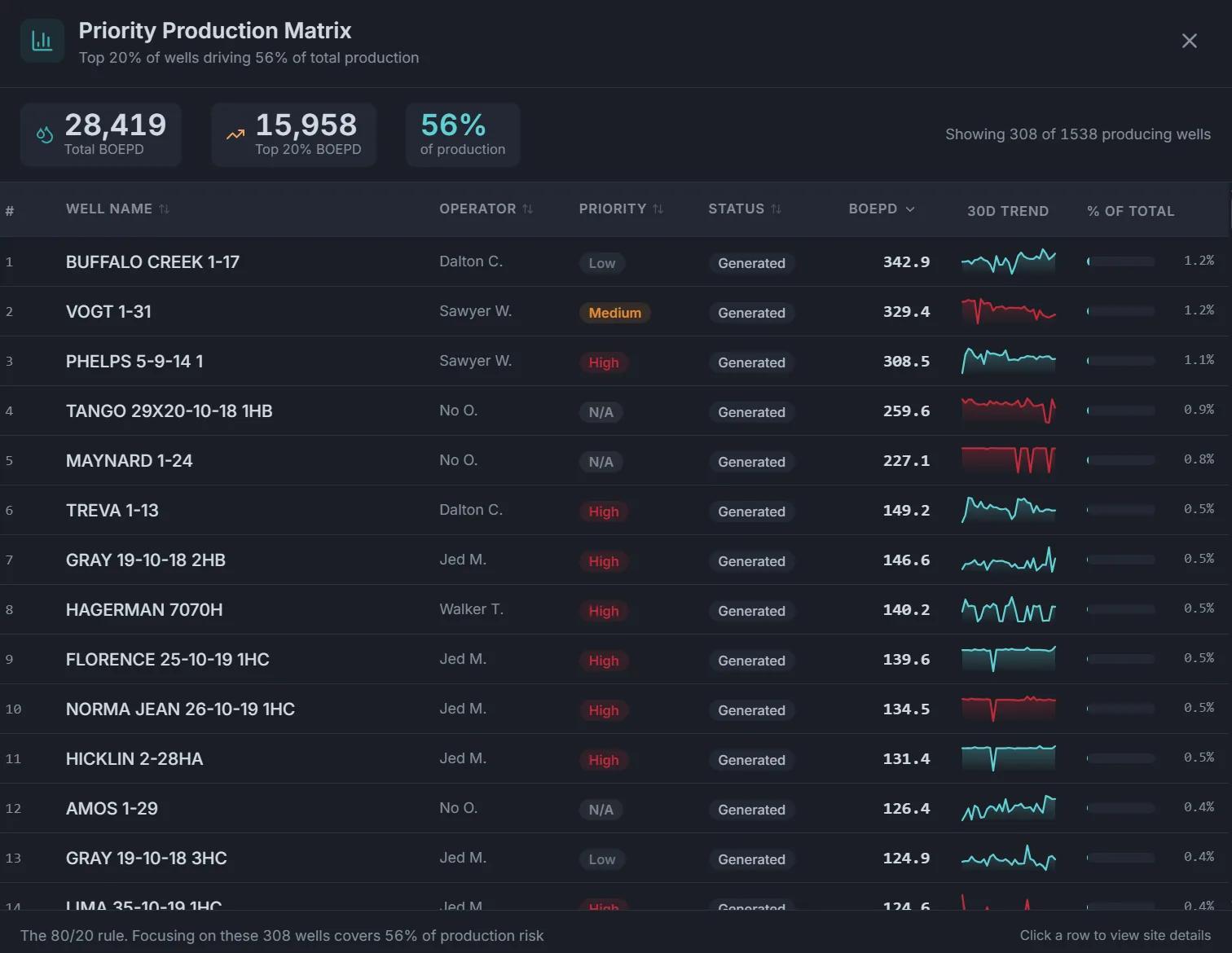
The queue the control room and the cab share: every job priced in $/day, re-ranked live in both directions. Illustrative data.
The center adds flags, holds jobs, and answers disputes, all inside the queue.
An analyst who sees something the models missed adds the flag by hand, and it enters the same queue with the same fields and the same score, so the system reconciles the two views instead of running a private list alongside the official one. A hold placed for a permit, a second person, or an open lockout stays attached to the job, visible to the crew that would otherwise have driven to it.
Disputes route to the room. When a field team member does not believe a flag, it lifts to the engineer or the foreman with the trend and the score attached and stays open until it is resolved, so the disagreement lands in one place with the evidence in front of it. Every hold, dispute, and deferral is recorded with its reason, which is what makes the model auditable a quarter later.
The morning meeting inverts.
Under pump by exception, the morning meeting assembles the plan. Under a ranked plan, the plan already exists at 6:00 AM and the meeting’s job inverts to exception handling on it: review the top tier, hear the overrides and their reasons, confirm the safety gates are staffed, and release.
The foreman stops being a human router and becomes the plan’s editor, and the override stream, one tap with a reason code, becomes the richest feedback signal the company owns. See how the ranking is calculated before you argue with it, or read what a released plan actually looks like.
One flag, end to end
What happens between the center seeing it and the center seeing it close.
The center already has the picture. These five steps are what turns a picture into a dispatched, costed, closed job, and every one of them is visible from the room.
It enters one queue
Telemetry, model output, hauling and tank state, PM schedules, and an analyst adding a flag by hand all land in the same list. Requests that used to arrive by text get an origin, a priority, and an outcome like everything else.
The engine prices it
Deferred production, failure cost if it runs to failure, and safety and regulatory exposure resolve to dollars per day against your price deck and your interest. The reason for the number is shown with the number, so the room can argue with the score rather than with each other.
The queue ranks and gates it
One ordered list for the whole area. Permits, qualifications, two-person requirements, and lockouts bind the ranking, so a job that cannot legally be worked yet is held with its gate visible rather than dispatched and turned back.
The cab works it
The crew qualified for the job and nearest the value gets the stop, with the reason it is on the list. Capture happens at the wellhead, online or offline, and the plan re-solves around a well that goes down mid-morning.
The room sees it close
Status, recovered production measured against the estimate, cost, and the failure code post as the job completes. Estimates that missed are visible to the people who own the model, which is how the next estimate gets better.
Every flag, score, rank, and route is also available over an API. Rankings land in your warehouse as tables rather than exports, your BI tools read the governed model directly, and your analytics team consumes the ranking in the tools it already built. The interface is for the field.
What operators get. In this order.
Downtime Reduction
The center dispatches against a declining well instead of watching it decline. The flag it raises reaches the cab already priced and already ranked.
Optimal Liquid Management
The center reads tank levels, hauling schedules, and fluid rates together, and catches the wells heading for a shut-in before the tank makes the decision.
Proactive Risk Management
A hold travels with the job. When the center gates work on a permit or a second person, the field sees the gate on the stop rather than hearing it on the radio.
The Full Picture of Value Sinks
Every override, deferral, and dispute is recorded with its reason, so the gap between what the model expected and what the field knew is measurable.
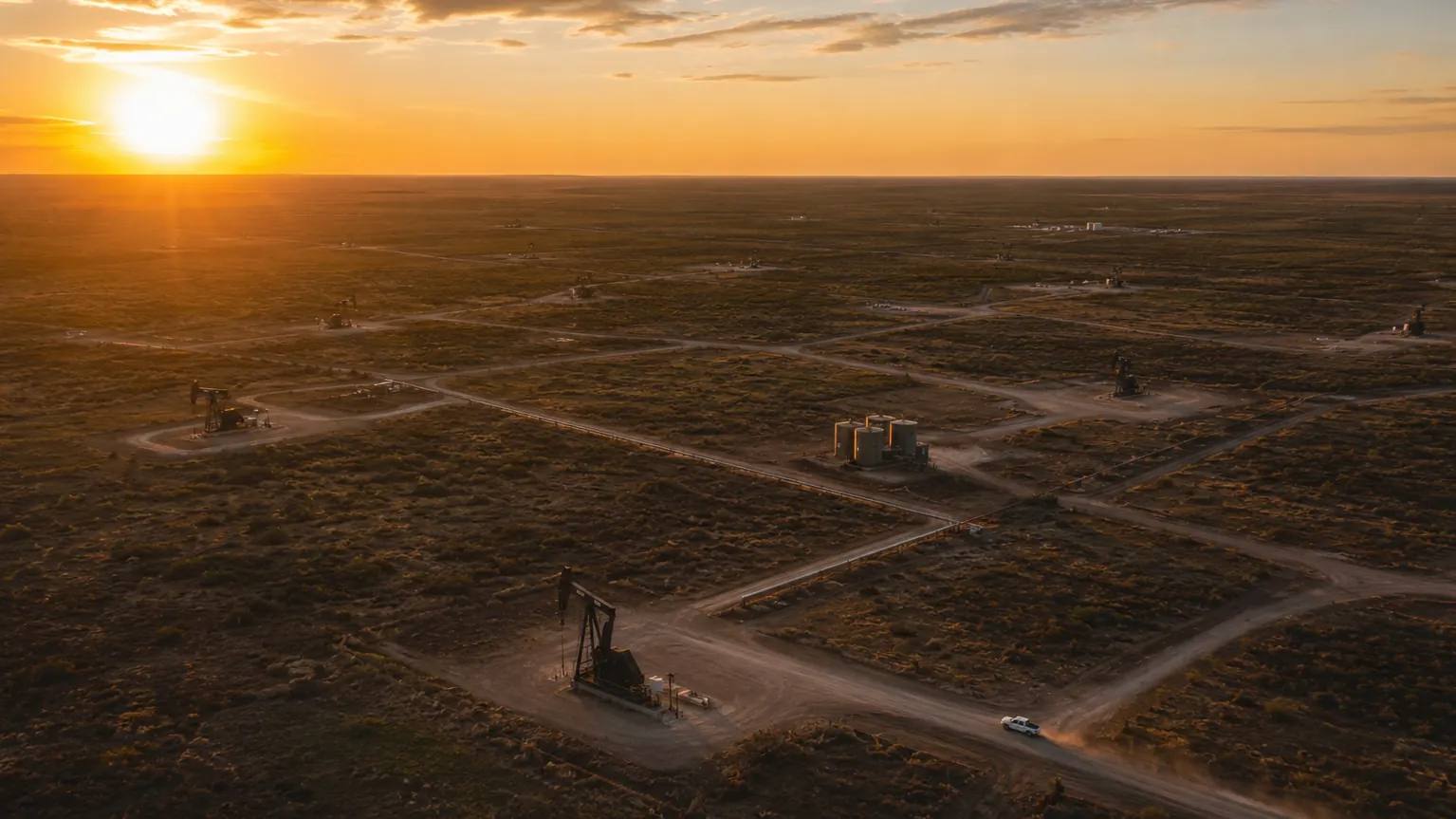
One queue in the control room, and at every site it sends a truck to.
Built to work with your lift program, your operations center, and the platform underneath
Your lift optimization, executed
Rod pump, ESP, and gas lift optimizers recommend. WorkSync prices each recommendation on deferment and failure cost, ranks it against everything else in the field, routes it to the right crew, and books the accrual with the work.
See the artificial lift story →The platform underneath
Five components, one ranked work loop: the data layer, the engine that prices the work, equipment and safety management, and the accrual that closes with the job.
Walk the five components →The engine the center argues with
Five scoring capabilities, the three-step data flow from flag to routed job, and what happens when the field disagrees with the rank.
Read how work is scored →How WorkSync fits in
Your systems flag it. WorkSync prices it, ranks it, and routes it: routeless, AI-driven operations that put every field team member on the highest-value work.
Your systems
WellOPS
Your field team
The support that keeps your field equipment running. Driven by one ranked queue, with a UX field teams love: built for the cab, offline-capable, and held to a design standard of under 20 minutes a day of software per field team member.
See your wells, ranked by dollars, tomorrow morning.
Bring one field’s data. We’ll show you the ranked plan your crew would have run today, and what it was worth.
See Your Wells Ranked