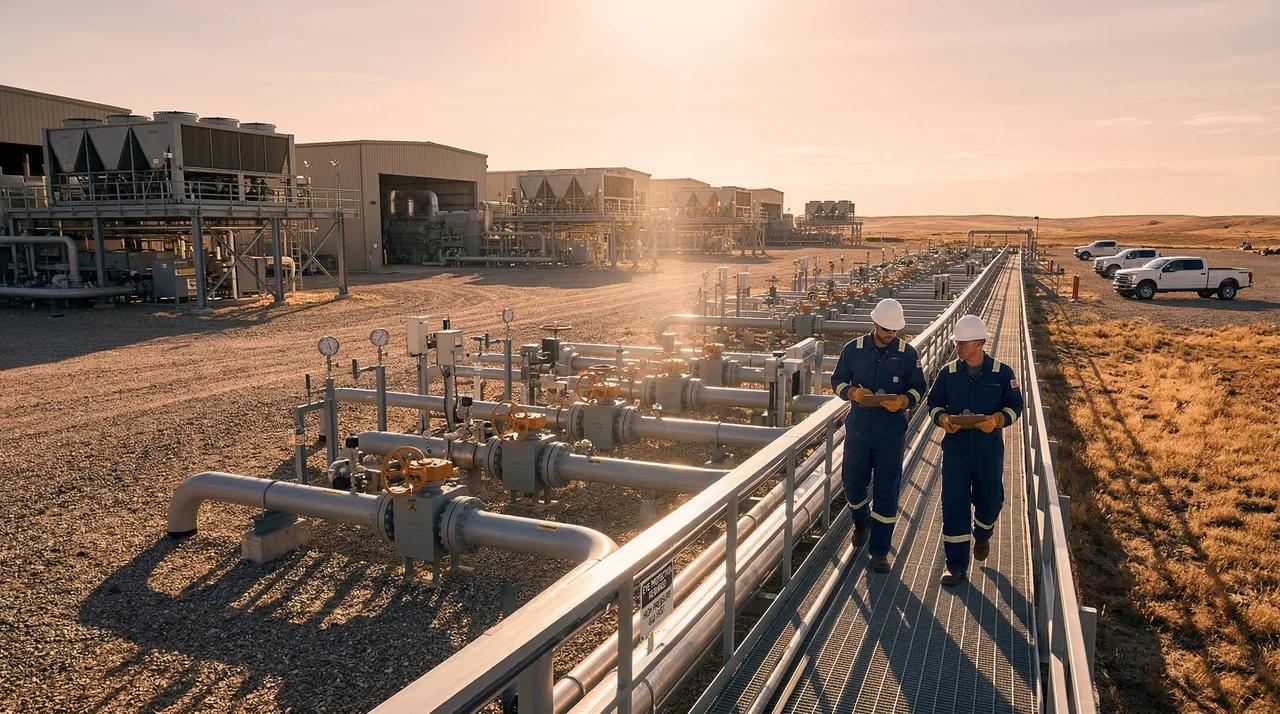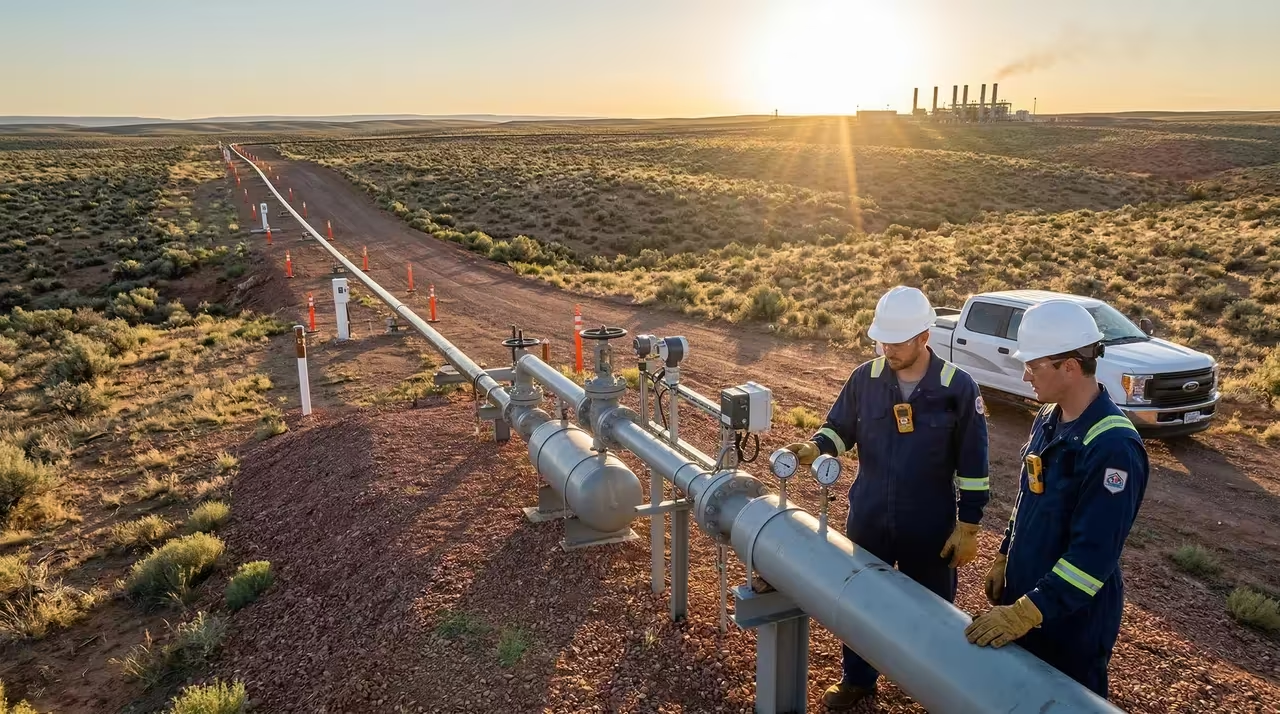
This company started as a safety assignment.Not a software idea.
I went in as an operations consultant at a large private operator. Not to build a product. I was there to rebuild a safety culture, after the worst possible reason to need one.
So we did. Bottom-up competency programs for every role. Risk profiles for every site. Training frameworks from the wellhead to the boardroom. The work was about how jobs got planned, staffed, and talked about, not about a number for a slide.
What I’m proudest of isn’t a lagging indicator. Near-miss reporting went up 300 percent. That’s the real metric, because that meant supervisors could finally see the risks their teams were actually exposed to. People trusted the system enough to speak up. That’s not a compliance win, that’s a culture shift.
Here’s what I didn’t expect. To rebuild safety, I had to sit in every truck, walk every lease, and understand how every decision got made, from the field to the executive suite. And what I saw changed everything for me.
The corporate team had full context. Production accounting, SCADA trends, financial forecasts, HSE dashboards, cost models. They could make strategic decisions with confidence.
The foreman making the actual decisions in the field had eight different apps, a stack of Excel spreadsheets, and a phone full of text messages from three different supervisors. Every month brought a new report to fill out, another PowerPoint, another form. And nobody, not one system, not one person, was telling him what mattered most today.
I sat down with the operators and asked one question: what burns your time? The answer was always the same: two or three hours a day trying to figure out where to go, then another hour at end-of-shift writing it all down.
And the plea underneath every one of those conversations was the same: please, no more apps. Nobody was being difficult. The field was drowning. A foreman was already flipping between eight systems just to get through the morning, and the last thing he needed was someone from corporate handing him tool number nine and calling it a solution.
We searched the market for three months looking for a different approach. Work order management systems. SCADA dashboards. Point solutions stacked on point solutions. What we didn’t find was anything that replaced the noise, anything that connected corporate strategy to the frontline decision maker in real time and actually reduced their workload instead of adding to it.
So we built it. We hosted a hackathon. We ran field simulations. We put it in the hands of operators, the same ones who’d begged us not to add another app, and watched what happened when the plan was already built. When every site was prioritized by cash-flow impact, paired to the right competency, and route-optimized before the first truck left the yard.
The result: 15 percent uplift in free cash flow. Same wells. Same team. Same day. Just a better plan.
That’s when it hit me. This problem isn’t unique to upstream production. It is every field operation in the energy industry, midstream, downstream, utilities, anywhere you have distributed assets and skilled people in trucks making critical decisions with incomplete information.
That’s why we started WorkSync. We’re a group of engineering and finance nerds who saw the gap between corporate strategy and field execution, and decided to close it. Not with another dashboard. Not with another app to add to the pile. With a system that builds the plan for your team, ranked by value, route-optimized, and ready before sunrise. Because we’ve been in those trucks. We’ve sat with those foremen at 5:45 AM. And we know the problem was never the people.