Knowledge for the Field

Field Insights & Resources

Practical playbooks, case studies, and field notes from our work modernizing oil & gas operations.

Browse Case Studies

Proven in Live Operations

15%+
Cash Flow Uplift
Across upstream ops
83%
Safety Improvement
TRIR 1.8 → 0.3
35%
Fewer Site Visits
Route optimization
40%
OPEX Reduction
Proven in live operations
95%
Eng. Effort Saved
FlowSync automation

Results validated across a 5,000+ well operation in the Western Anadarko Basin in a live field deployment.

Safety Moments

Read this before the next shift starts.

Field-engineering deep-dives on the hazards that hide inside routine upstream work. Written to be read at a tailgate, sent to a supervisor, or read aloud before the task that the public record says is most likely to kill the next worker.

3 moments
Safety Moment14 min read

Why Tank Gauging Is Dangerous

Nine workers died during manual tank gauging or sampling between 2010 and 2014, every one of them working alone. NIOSH measured benzene at open thief hatches over 2,000x the recommended exposure limit. The API 12F tank that sits behind n...

9
Worker deaths during manual gauging or sampling (NIOSH/OSHA, 2010-2014)
>200 ppm
Peak benzene at open thief hatches (NIOSH, x NIOSH REL of 0.1 ppm)
Read the Safety Moment
Safety Moment10 min read

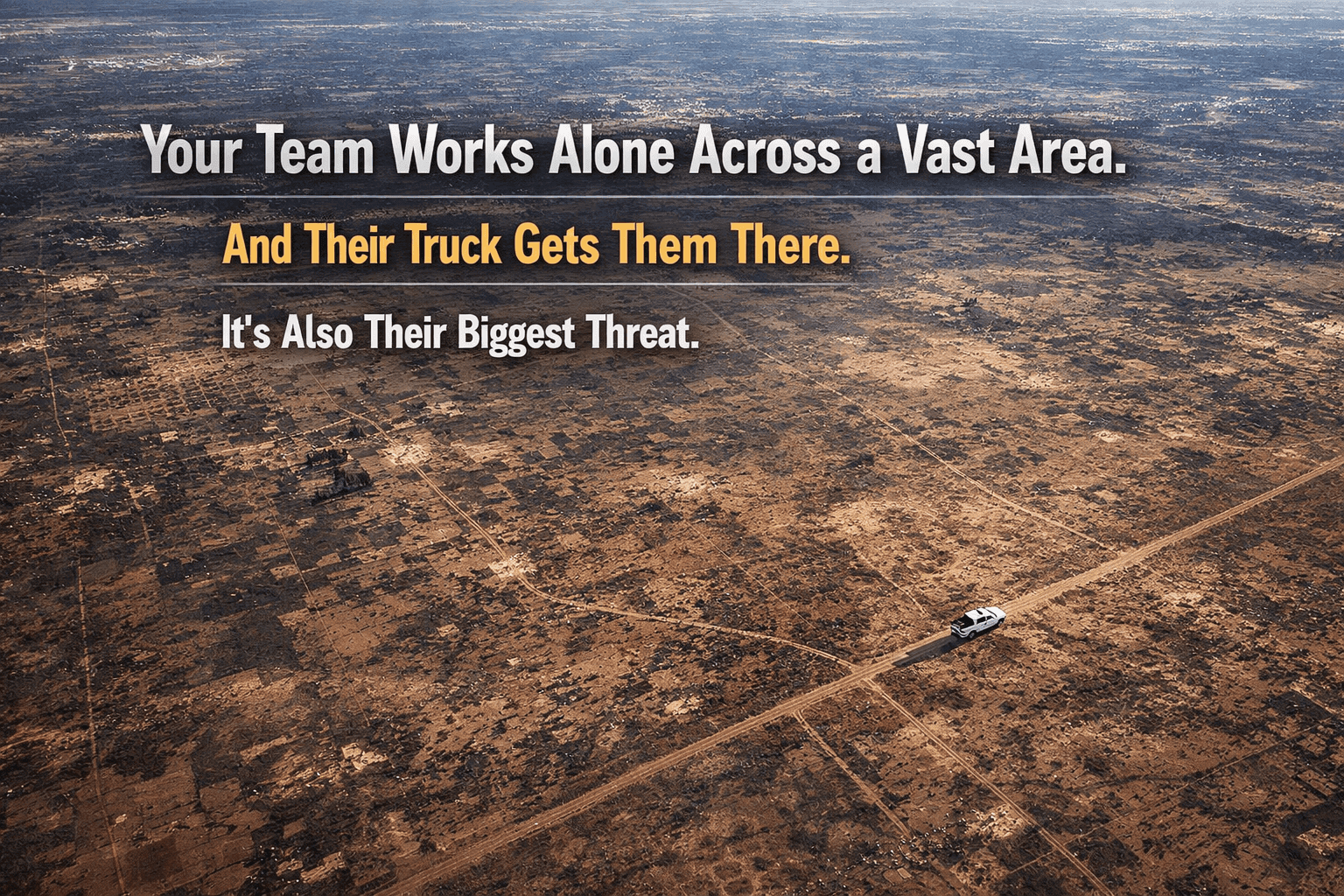
The Most Dangerous Task on the Lease Is the Drive to It

Vehicle incidents kill more upstream oil and gas workers than any single on-site hazard. The industry has spent two decades making the drive safer, and those controls work. But they all assume the trip happens. The first-order question h...

126
Upstream vehicle-incident fatalities, 2014 to 2019 (NIOSH FOG)
~54%
Vehicle deaths occurring between midnight and 9 AM
Read the Safety Moment
Safety Moment13 min read

Seven Holes in the Cheese: The 2019 Aghorn H2S Fatalities and What Defense in Depth Actually Means

On October 26, 2019, two people died at an Aghorn Operating waterflood station outside Odessa. The U.S. Chemical Safety Board final report names seven independent failures that aligned in a single afternoon. None of them felt critical al...

470
Upstream U.S. oil and gas worker fatalities documented by NIOSH, 2014 to 2019
~10%
Share of those fatalities caused by contact with a harmful substance (H2S is the hazard operators rank highest)
Read the Safety Moment

Use Cases

Five ways operators put us to work

Same platform, very different jobs. Each of these ran against a live operator; the outcomes listed are the ones they walked away with.

Use Case 01OPS · Work Engine

Draw down oil inventory with OPS

Instead of pumping on a schedule, crews run the wells the Work Engine says will move the most barrels that day. Tanks breathe; gauge calls drop; trucking catches up.

Outcome: inventory cut by 70%, fewer stuck wells, no extra headcount.

Use Case 02OPS · Field Safety

Voice-to-text and agents in the field

AI drafts the JSA; the crew edits it by voice. An agent pulls the relevant engineering assessment and the right section of the technical manual before the first bolt comes off.

Outcome: JSAs take minutes, not the drive in. The safety conversation stays on the truck.

Use Case 03SYNC · FlowSync

Run thousands of scenarios; find the pinch point

We helped an operator scan a 40,000-node gathering system to find the bottleneck no engineer had time to hunt down manually. Thousands of scenarios, parallel, against their live hydraulic model.

Outcome: constraint identified in under 24 hours; debottlenecking plan on the same page.

Use Case 04OPS · Route Optimization

Resource planning after an acquisition

An operator closed an acquisition and needed to absorb 30% fewer field staff without losing coverage. We rebuilt the daily route and shifted to dynamic dispatch tied to value density, not geography.

Outcome: the same asset ran with 30% less headcount; no production drop in the first quarter.

Use Case 05SYNC · Golden Record · Pipeline Model

Audit post-production costs against the model

We pointed our production, facility, and pipeline model plus the asset framework at a post-production cost file. The numbers didn't line up with what the pipe could physically do.

Turned out the midstream counterparty had an accounting error. We recovered the value with deductive proof; no lawyers, no shouting match.

Outcome: $4,000,000 in lost recovery pulled back. Same model now runs every month as a back-check.
The Proof

Case Studies

Real results from real operations across the Western Anadarko Basin.

Production Ops

Prioritizing Production in the Western Anadarko

How a 500-well operator used Work Engine to move from route-based checking to exception-based management, achieving a 15% Cash Flow increase.

8 min readRead Case Study
Cost Control & AI

Financial & Operational Optimization Using Work Engine

Connecting the boardroom to the lease gate: How to use Cash Flow Delta Forecasting to drive daily field activities.

12 min readRead Case Study

Insights

Articles & Field Notes

Deep dives into operational intelligence, field execution, and the technology shaping modern energy operations.

Events

Talks & Webinars

Upcoming Webinars

Join our engineering team for deep dives into operational architectures, UNS implementation, and practical AI use cases.

See your operation on a ranked work plan in 1 to 2 weeks.

Tell us your system stack and your biggest operational challenge. We'll show you how WorkSync delivers a prioritized daily plan in your environment, with your data.

Stand up in 1 to 2 weeks. We charge when your number moves.