TITLE: 18 of the Right Sites Is Better Than 26 of the Wrong Ones
SLUG: /insights/do-more-by-doing-less
PILLAR: The Approach
AUTHOR: WorkSync
READ TIME: 8 min read
PUBLISH DATE: 2026-03-22
META TITLE: 18 of the Right Sites Is Better Than 26 of the Wrong Ones | WorkSync
META DESCRIPTION: Field teams weren't being inefficient; they were being rushed. When we mapped what operators actually did each day, the real problem wasn't too much time at each site. It was too little.
FEATURED: false
EXCERPT: The assumption was that field crews were spending too much time at each location. The data showed the opposite. They were rushing through sites, skipping completable work, and driving to the next location out of instinct, not necessity. The fix changed everything.
18 of the Right Sites Is Better Than 26 of the Wrong Ones
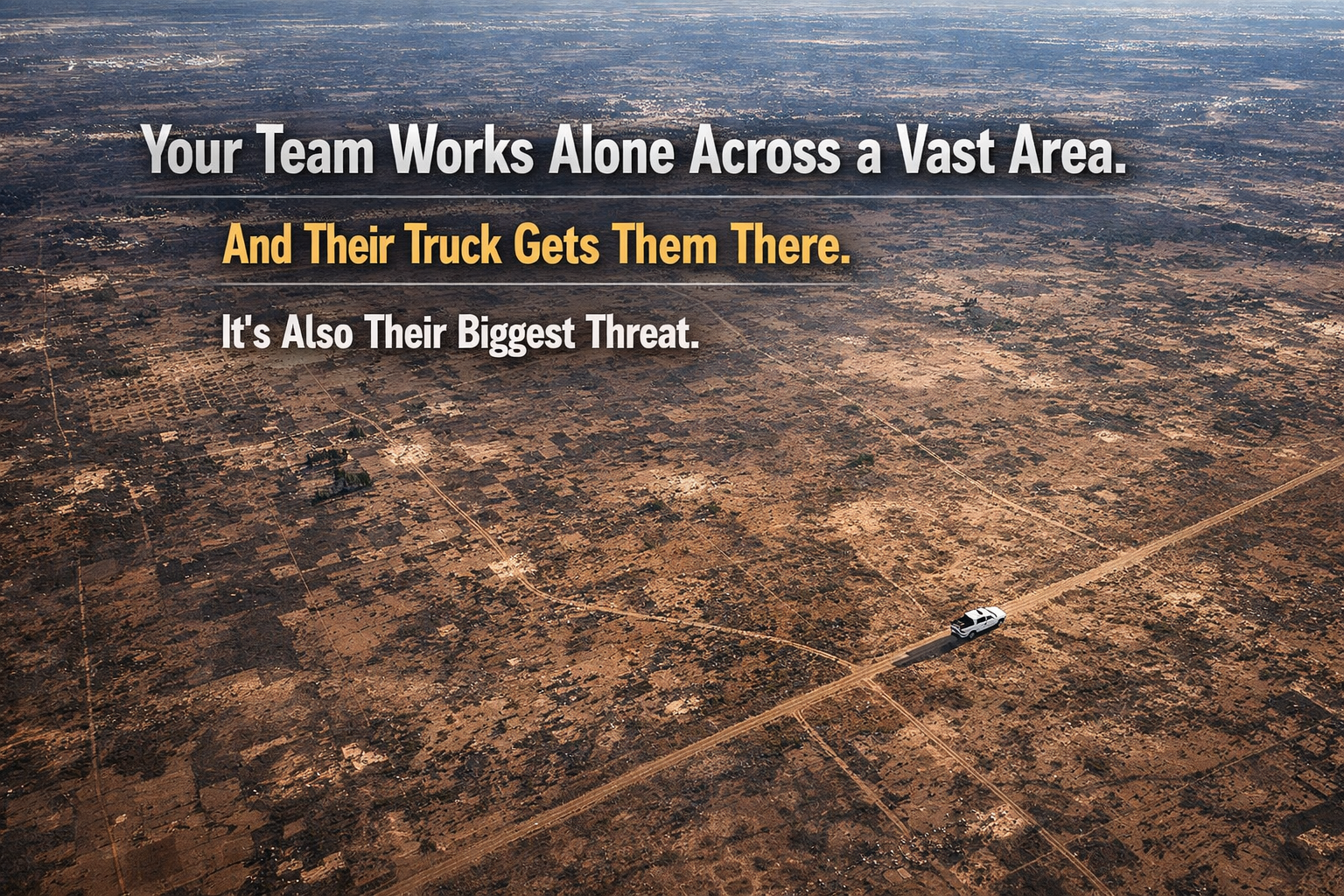
One of the biggest surprises we found when we actually mapped out what field employees were doing every day was this: they weren't spending too much time at each site. They were spending too little.
That ran directly counter to the prevailing assumption. Ask anyone on the corporate side what the field efficiency problem was, and you'd get some version of the same answer, operators are spending too long at each location, they're not covering enough ground, we need more visits per day. The entire framing was about throughput. More sites. More stops. More windshield time disguised as productivity.
What the data showed was the opposite.
The Rush to Nowhere
When we looked at actual field behavior, not what was reported, not what was assumed, but what operators were actually doing between 6 AM and 4 PM, a clear pattern emerged.
If an operator had three tasks they could complete at a single site, they would typically get there, finish one or maybe two, feel the pull of the next location, and leave. The third task, often something they were perfectly capable of handling right then and there, got deferred. Not because it wasn't important. Not because they forgot. Because they had it in their heads that they needed to get to the next site as fast as possible.
This wasn't laziness. It was the opposite. These were conscientious people trying to cover their entire route, trying to touch every well, trying to make sure nothing got missed. The instinct was to keep moving at all costs. And in a world where your daily plan is a list of twenty-six locations with no indication of which ones actually matter most, that instinct makes perfect sense.
The problem is that it optimizes for the wrong thing. Visiting twenty-six sites and doing partial work at each one isn't efficiency. It's motion. And motion without completion is just driving.
The Real Cost of Incomplete Visits
The downstream effects were significant, even if they didn't show up on any standard operations report.
When an operator leaves a site with a task unfinished, that task doesn't disappear. It goes back into the queue. It gets assigned again, sometimes to the same person the next day, sometimes to someone else who has to drive back out, re-assess the situation, and start over. What could have been handled in a single twenty-minute stop turns into two separate trips across two separate days.
Multiply that across a field with hundreds of wells, and the waste is enormous. Not waste in the sense that people are standing around doing nothing. Waste in the sense that significant drive time, fuel, and human hours are being consumed to re-visit work that was already within arm's reach.
Worse, the tasks getting skipped weren't random. They tended to be the third-priority item, the one that felt less urgent in the moment. But "less urgent" at a high-value well can still mean thousands of dollars in deferred production per day. When an operator rushes past a completable task at a well producing $1,400 per day to check on a well producing $158 per day, the economics are upside down. Nobody intended that outcome. But without visibility into relative value, it happened constantly.
The Fix Was Simpler Than Anyone Expected
The solution wasn't a new technology deployment. It wasn't a process overhaul. It wasn't a lecture about efficiency metrics.
It was a shift in thinking: slow down. Stay at the site. Finish what needs to get done before you leave.
That sounds almost trivially simple. But it only became possible once operators got comfortable with a fundamentally different idea about what a successful day looks like. The old model said success was touching every site on your route. The new model said success was completing the highest-impact work available to you, wherever that work happened to be.
Eighteen of the right sites is better than twenty-six that includes some of the wrong ones.
Why the Old Instinct Was So Hard to Break
Changing this behavior wasn't as simple as telling people to slow down. The instinct to keep moving was deeply rooted, and for good reason.
In the absence of reliable prioritization, the safest strategy for a field operator is to cover as much ground as possible. If you don't know which wells actually need you today, the rational move is to check all of them. If you can't tell whether the well you're standing at is more important than the next one on your list, the safe play is to keep moving so you don't miss something critical further down the route.
That instinct is a perfectly rational response to an information vacuum. And no amount of training, coaching, or management pressure can override it, because the underlying uncertainty hasn't changed. As long as operators don't trust that their plan has accounted for what matters, they'll keep trying to account for everything themselves.
What actually changed the behavior was giving operators direction they could trust. When the system showed up every morning with a prioritized list, ranked by cash flow impact, maintenance urgency, and safety risk, it created a fundamentally different operating context. The list wasn't twenty-six sites. It was twelve, or fifteen, or eighteen. And the reason it was shorter wasn't because someone decided to reduce the workload. It was because the system identified which sites would generate the most value that day, given current conditions, and filtered out the noise.
Once operators saw that the direction they were getting was better, that the sites on their list actually were the ones that mattered, the instinct to keep moving at all costs started to fade. They didn't need to hedge against uncertainty anymore. The uncertainty was gone.
What Happened When the Rushing Stopped
Within a few weeks, the results showed up in the data without anyone announcing a new initiative.
Task completion rates went up. Not marginally, meaningfully. When operators stayed at a site long enough to finish the work, the work got finished. That sounds obvious in hindsight, but it represented a real shift from the previous pattern of partial visits and deferred tasks.
Critical issues got resolved faster. Problems that used to sit in a queue for a second or third visit were being handled on the first trip. Mean time to resolution dropped because the resolution was happening at the point of first contact, not after multiple return visits.
Drive time decreased. Fewer total sites per day, but higher completion per site, meant less back-and-forth. Operators weren't doubling back to finish yesterday's deferred work. The total miles driven went down while the total value of work completed went up.
And something harder to measure but equally real: operator stress decreased. The feeling of constantly being behind, of knowing there were always more sites to get to, more things that might be going wrong somewhere you hadn't checked yet, started to lift. When you trust your plan, you don't carry the weight of everything you might be missing.
None of this happened because anyone worked harder. It happened because the work finally matched the reality of what actually needed to get done.
The Deeper Lesson About Field Optimization
This pattern shows up everywhere in energy operations, and it's almost always misdiagnosed.
When production metrics are flat or declining, the reflexive response is to push for more activity. More inspections. More site visits. More data collection. The assumption is that volume drives results. And in a world where you can't distinguish high-value work from low-value work, volume is the only lever you have.
But the moment you can see relative value, the moment you can rank every potential task by its actual economic impact, the entire calculus changes. You stop asking "how do we do more?" and start asking "how do we do the right things?" Those are fundamentally different questions, and they lead to fundamentally different outcomes.
The field crews we worked with didn't need to be told to work harder. They needed to be told where their work would matter most. Once they had that, they made better decisions on their own, including the decision to slow down, stay put, and finish the job.
Have you ever seen a team do more by doing less? We have. And it started the day they stopped trying to be everywhere and started being exactly where they needed to be.
WorkSync delivers prioritized, route-optimized field plans every morning at 6 AM, ranked by cash flow impact, not geography. The result: fewer sites visited, more value captured, and field teams that trust their direction. See what optimized operations look like for your team.
Want case studies and benchmarks like these?
For upstream + midstream operations leaders. Share your work email and our team will follow up with case studies, benchmarks, and what's changing in the field.