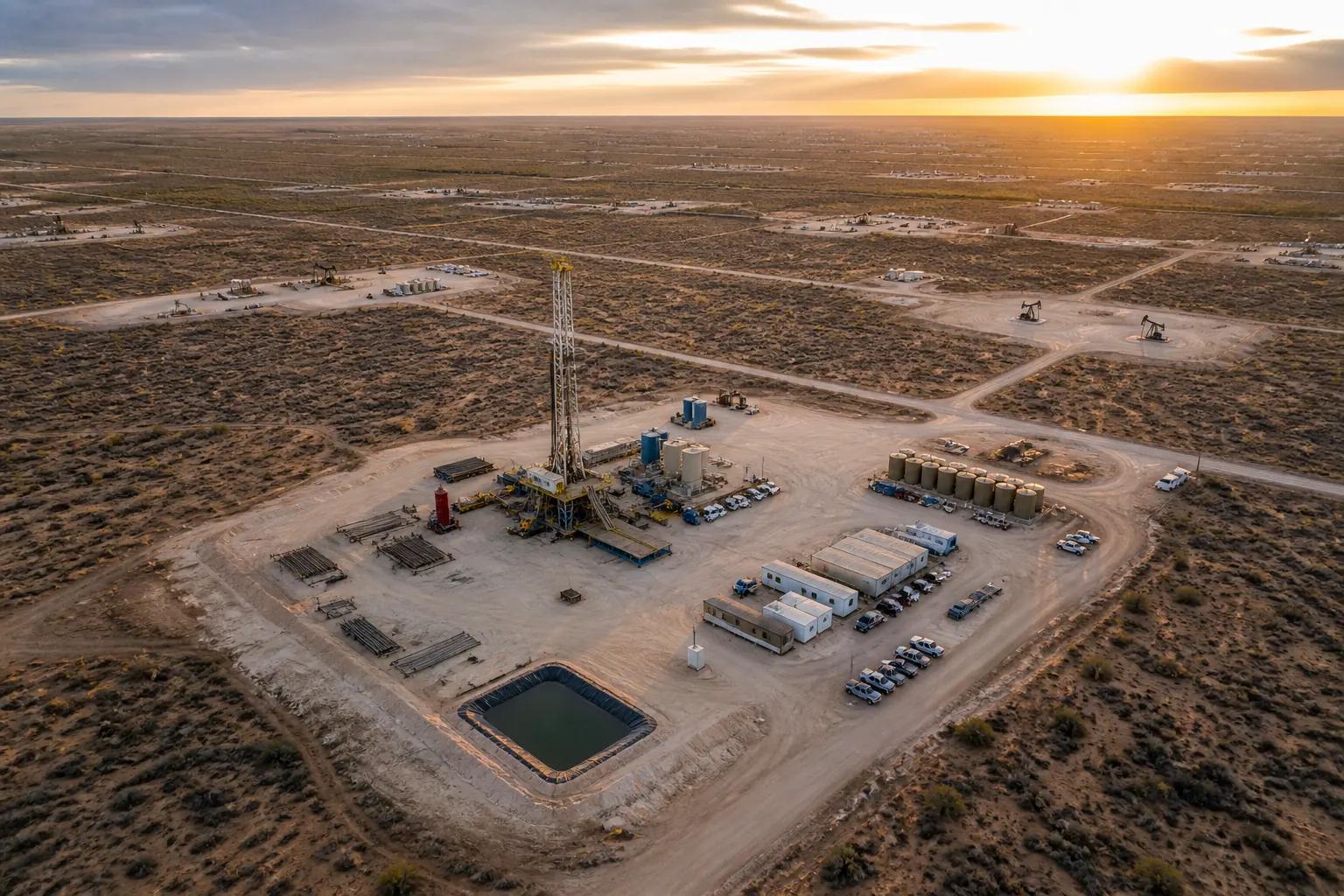
The most common reason smaller operators never start management by exception is a prerequisite list somebody sold them: a data team, a data lake, an integration project measured in fiscal years. None of it is required. This is the honest starting guide for the operator running on SCADA and spreadsheets, or gauge sheets and a phone tree: what you actually need on day one, what the first four weeks look like, and what to demand from any vendor before you sign anything, including us.
The Prerequisite List Is the Product Nobody Should Buy
Ask most software vendors how to get to management by exception and the answer arrives as a roadmap: first a data assessment, then a data engineer or two, then a warehouse or a lake, then an integration phase, and then, somewhere in year two, the operating model itself. Every item on that list generates billable work before a single truck roll changes.
Here is what that sequencing gets wrong. The operators with the strongest published exception-based results did not clean their data first and operate second. They started operating on the data they had, and the data got better because people were finally using it. A mislabeled tag gets fixed the week it misroutes a pumper. It survives forever in a data lake nobody drives a route from.
The MIT finding that 95% of GenAI pilots fail to deliver measurable P&L impact is usually quoted as a warning about AI. Read it instead as a warning about sequencing: the failed pilots overwhelmingly built infrastructure and demos first and changed an operating decision never. The pilots that survive are the ones wired to a number somebody owns.
So the honest prerequisite list has three items, and you already have all three: the systems you run today, one field, and one number you want to move.
Start From the Systems You Already Run
Management by exception runs on signal, and you have more of it than the assessment deck gave you credit for.
If you have SCADA or a historian, that is the primary feed. It does not need to be modern, complete, or clean. Stuck transmitters and unmapped tags are found-and-fixed items inside the first month, not blockers before it.
If some leases are on gauge sheets and run tickets, those count too. A daily gauge reading is a production signal. Structured capture of what the pumper already writes down is enough for the scoring to start ranking wells, and it is dramatically cheaper than the instrumentation project the vendor roadmap wanted first.
Your production accounting system is the economic backbone. Working interests, lifting costs, and realized prices are what turn a deviation into a dollar figure, and a dollar figure is what makes an exception worth a truck roll. This data is already maintained to accounting standard because the revenue distribution depends on it.
Your EAM or CMMS, if you have one, adds the maintenance history. If you do not have one, start without it.
The integration pattern that makes this workable is read-first: the system that runs the scoring reads each source where it lives, and the source systems remain authoritative. Nothing migrates. Nothing gets re-keyed. That is the job DataHub was built for, and it is why integration is measured in days, not quarters. No data team is hired anywhere in this paragraph.
Want case studies and benchmarks like these?
For upstream + midstream operations leaders. Share your work email and our team will follow up with case studies, benchmarks, and what's changing in the field.
One Module, One Field, a Signed Metric on Day Zero
The second trap after the infrastructure project is the everything-at-once deployment. The right scope for a first move is deliberately small.
One module. Not the full platform. Pick the capability aimed at your loudest leak: if deferred production is found days late, start with anomaly detection and the ranked plan; if windshield time is eating the day, start with routing.
One field. One crew, one geography, one route that can be compared honestly against how the field ran last quarter. Small enough that skeptics can watch it, big enough that the number means something.
A signed metric on day zero. Before anything is installed, the operations lead and the person who owns the P&L pick one number and write down its current value and the threshold that counts as "moved." Days from anomaly to first field response. Deferred production found per week. Truck rolls per lease per month. One page, signed, dated. This is the discipline that separates an operating change from a science project, and it is the foundation of the Impact Guarantee: we charge when your number moves.
What the First Four Weeks Look Like
Week 0, before the clock starts: pick the field, pick the metric, sign the baseline. Half a day of meetings, not a discovery phase.
Week 1: read-only integration. SCADA or historian, production accounting, and whatever field capture exists today get connected read-only. Your IT lift is comparable to standing up another reporting connection. No new hardware on location.
Weeks 2 and 3: the ranked plan goes live. Scoring runs nightly and a ranked, routed plan is in the truck cab by 6 AM. The crew runs it, argues with it, and corrects it, and the corrections feed back into the next morning's ranking. This is the part no slide deck can fake: either the plan is finding things the old route missed, or it is not.
Week 4: measure and decide. The metric gets read against the day-zero baseline, by the person who signed it. Moved past the threshold: expand to the next field on the same terms. Did not: walk away with the integration documentation and the baseline data, and you have lost four weeks and no license fee.
Notice what is absent: no hiring, no data lake, no steering committee, and no eighteen-month anything.
What to Demand From Any Vendor, Including Us
If you take nothing else from this guide, take the checklist. Any vendor selling you a path to management by exception should clear all four, in writing.
Read-first integration. Their system reads yours where they live; your systems of record stay authoritative; you keep the integration documentation either way. Any pitch that starts with migrating your data is an infrastructure project wearing an operations costume.
A walk-away clause. A defined pilot window, a metric chosen by you, and a clean exit with no license fee and no kill fee if the number does not move. A vendor that will not put its fee behind your metric is telling you what it expects the metric to do.
Field adoption evidence. Not screenshots. Ask for proof that pumpers and foremen at a real operator use the tool daily, and ask what the vendor does when a crew overrules the plan, because a system that cannot take a correction from the field will not survive contact with one. WorkSync's reference is a top 25 private producer running 5,000+ wells across three basins, where the model delivered 15% FCF uplift on the same crew and cut miles driven by 35%.
Exceptions defined in dollars. Ask to see a live exception. If it does not carry an economic value a controller would defend, you are buying an alarm system, and you already own one of those.
Pricing should survive the same scrutiny: scoped to your operation by the people who will implement it, and structured so the expansion decision belongs to your results, not to a contract.
The Questions That Come Up Every Time
The same four objections surface in nearly every first conversation with an operator at this starting position, so here are the straight answers.
"Our data is too messy for this." Messy compared to what? The scoring does not need clean data. It needs consistent-enough data to rank wells against each other, and the messiness gets found and fixed in the order it costs money, which is the only prioritization of data cleanup that has ever actually finished. The operators that waited for clean data are still waiting.
"We don't have SCADA on half our leases." Then start with the half that has it, or start with what the gauge sheets capture. Partial signal ranked in dollars beats complete signal ranked by nothing. And once the model is running, it tells you exactly which uninstrumented leases would pay back a telemetry spend first, which turns the SCADA budget from a leap of faith into a ranked list of its own.
"Nobody here can maintain a system like this." Nobody there has to. That is the entire point of buying the model as a product instead of building it as a project. The read-first integration means there is no pipeline for your office to babysit, and the vendor's job under the Impact Guarantee is keeping the loop running well enough that your number keeps moving. If a vendor's answer to maintenance is a staffing plan on your side of the table, that is the infrastructure project again, wearing a new hat.
"We're too small for the vendors to care about." Some vendors, honestly, yes. Which is why the demand list above includes published pricing below committee level and a pilot scoped to one field. Those two features are what a product built for your segment looks like, as opposed to an enterprise platform quoting down.
Start Smaller Than Feels Ambitious
The operators that get stuck are almost never the ones that started too small. They are the ones that waited for the prerequisite list, or launched an everything-at-once program that collapsed under its own change management. One module, one field, one signed number. Four weeks later you either have evidence or your exit, and both are worth more than another year of planning.
Show Me My Number: pick the field and the metric, and see a ranked plan built from your own data in a four-week pilot. Start the conversation. One page to sign, and a walk-away clause on it.