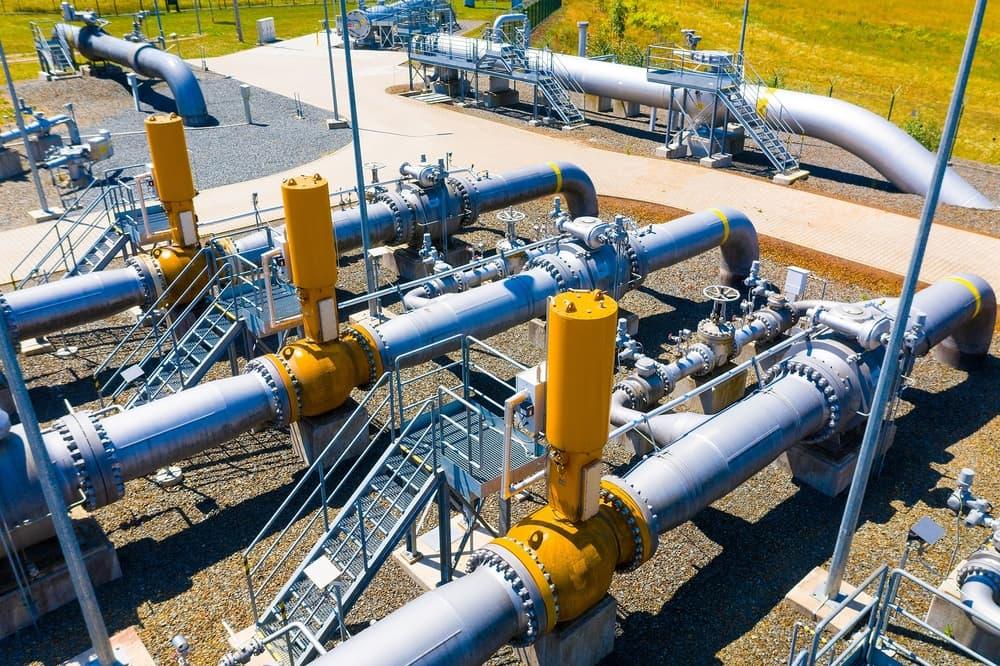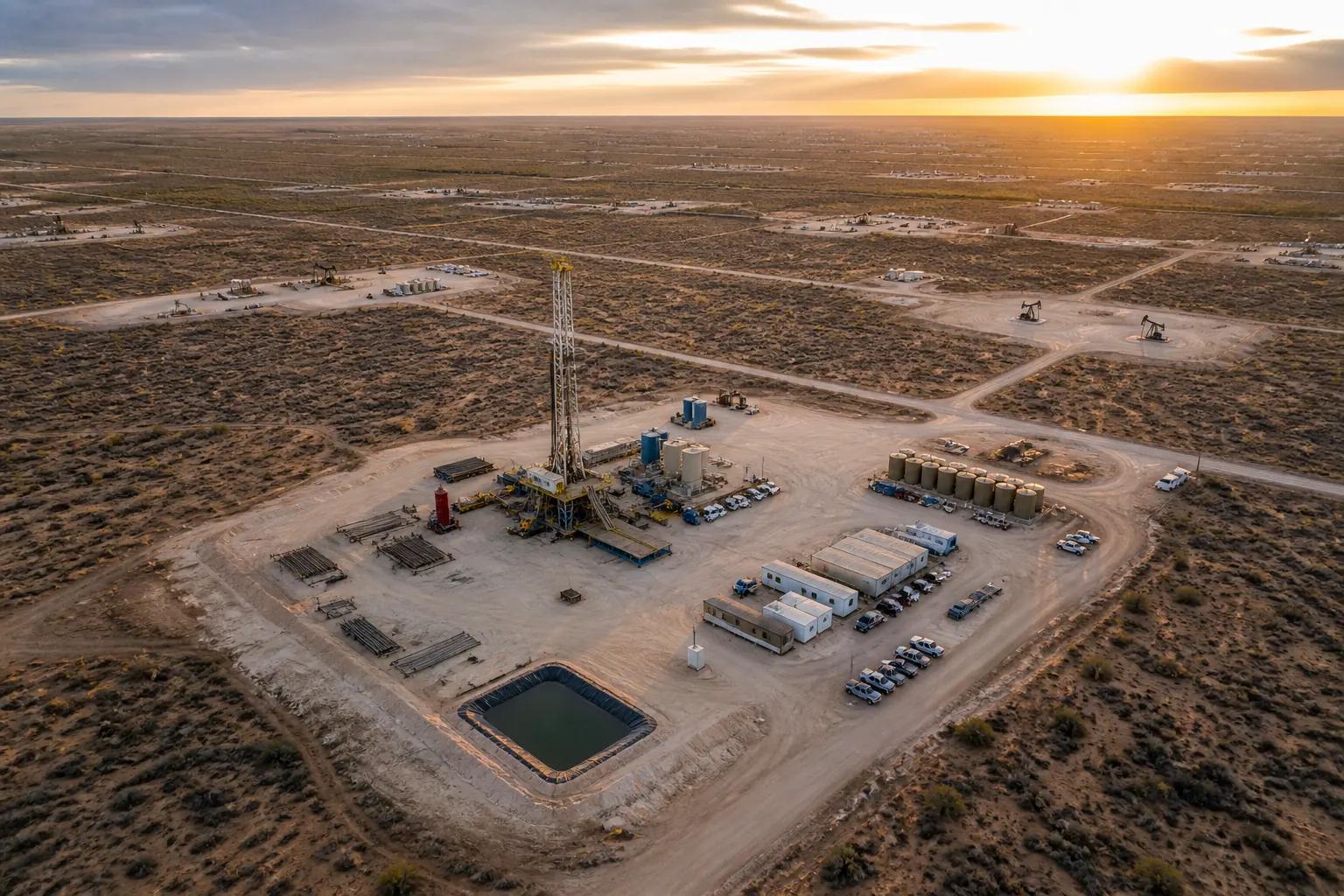
Three sentences keep coming up in every conversation with a small-to-mid independent right now. We aren't ready for AI. Our data isn't ready. We are still working on governance. The supermajors stopped saying any of those things four years ago. The reason matters for the operator who has not started yet.
The Sentence the Consultants Will Tell You First
If you are running a 200 to 2,000-well independent right now and you have asked a Big Four consultant or a hyperscaler partner what to do about AI, you have heard a version of the same answer. Clean your data first. Build the lake. Stand up the governance framework. Hire a chief data officer. Get the master data model right. Then we can talk about AI.
That is the supermajor playbook. ExxonMobil, Chevron, Shell, Equinor, and ConocoPhillips paid the tuition on that playbook between 2017 and 2022. Their data lake projects ran four to six years. Their governance programs are now multi-hundred-person organizations. Their cloud commitments are in the nine figures.
The independent who is being sold the same sequence in 2026 is being sold a 2017 idea.
The supermajor proof points the same consultants now use to justify their AI practice are not the result of the data lake. They are the result of running well-bounded, vertical models on the SCADA history operators have always had.
The Supermajor Numbers, Sourced
The two operating data points that anchor the AI-for-upstream conversation right now both come from operators who are very public about the work, and neither one is the result of a multi-year data lake program.
ExxonMobil and SLB published a joint case in 2024 on gas-lift optimization across 1,300-plus unconventional wells in the Permian. The reported uplift is 2.2 percent of production, on the same wells, with the same artificial lift equipment, against the live SCADA stream. No new sensors. No additional historian instances. No lake-first architecture. The model is trained on the curves the SCADA system has been recording since the wells came online. The source is the Oil & Gas Journal coverage of the SLB DELFI announcement.
ConocoPhillips' Plunger Lift Optimization Tool (PLOT) is deployed across 4,500-plus wells and lifts gas production by up to 30 percent on the population, depending on basin and well class. Same pattern. The PLOT system reads the SCADA the operator already had, runs a model on the cycle characteristics, and adjusts the plunger logic at the well. The reported deployment is documented in JPT's "Unsung Hero: Artificial Lift" feature and in ConocoPhillips' own investor materials.
Neither one of those programs paused for a data lake. Both ran against the SCADA history that was already in the historian when the project started.
The point is not that the operating-data plumbing did not matter. The point is that the plumbing that mattered was the plumbing the operator already had: SCADA, the historian, the artificial-lift PLC programs, the lease accounting feed, and the well file. The vendor that won the work was the vendor who pre-integrated those sources and built a model against them. Not the vendor who proposed a five-year lake.
Want case studies and benchmarks like these?
For upstream + midstream operations leaders. Share your work email and our team will follow up with case studies, benchmarks, and what's changing in the field.
Why the Lake Was a 2017 Idea
The data lake architecture was the right answer to a 2017 problem. Compute was expensive. Data movement was expensive. Storage was cheap. The pattern was: dump everything into one cheap-storage tier, schedule batch jobs against it, build dashboards on the curated layer. The supermajors built lakes because their data volume was large enough that the cost of repeatedly querying the source systems exceeded the cost of building a parallel storage tier.
Three things broke that economics in the five years since.
One. Inference cost collapsed. Stanford's 2025 AI Index report puts the cost of running an inference call on a GPT-3.5-class model at roughly 280 times lower than its launch price. The economics of "store everything once, query it many times" no longer holds when the query itself is essentially free. The cheaper way to run AI in 2026 is to leave the data in the system of record and pull it on demand.
Two. Vertical AI vendors emerged. Harvey, the vertical AI for legal work, crossed an $11 billion valuation in March 2026. Sierra, the vertical AI for customer service, crossed $10 billion. Cresta, Glean, EvenUp, and a dozen others sit in the same band. Every one of those companies competes on pre-integrated workflows for one industry, not on a horizontal model that can be configured for everything. The reason they win is the same reason a domain-specific model trained on legal contracts beats a horizontal copilot on a legal contract: the proprietary data and the workflow integration are the moat.
Three. The integration cost dropped faster than the lake cost. Modern integration patterns (event streams, secure read-only API gateways, ABAC layers) make it cheaper to connect to twelve systems in their native homes than to extract them all into a thirteenth. The lake was a workaround for a connection problem. The connection problem is now solved by other means.
The independent that builds a lake in 2026 is paying for a workaround to a problem that no longer exists.
What the AI Stack Actually Looks Like for an Independent
For an operator that runs 200 to 2,000 wells, the working AI stack does not include a lake at all. It looks like this.
The data backbone. A pre-integrated layer that reads production accounting, SCADA, EAM/CMMS, GIS, HSE, and engineering drawings in their native homes, in read-only mode, in under a week. No rip-and-replace. No new headcount. No new sensors. The operator's existing systems remain authoritative.
The vertical AI agents. Domain-bound models that read the backbone and produce field-grade output. WellOps' Willie captures every pumper visit by voice and ranks the next-best action against cash-flow impact. FlowSync's Taylor reads engineering drawings, runs hydraulic scenarios, and drafts MOC language with every citation back to the source document. Both are scoped to the operator's data, the operator's procedures, and the operator's compliance posture. Neither one is a horizontal copilot.
The decision loop. The output goes to the lease operator, the dispatcher, the planning engineer, and the operations manager in the form each one already uses. Ranked routes for the pumper. Exception alerts for the dispatcher. Scenario timelines for the engineer. Cash-flow-attributed deferment for the manager.
That is the stack. There is no data lake in it. There is also no horizontal copilot in it.
The Anti-Copilot Section the Consultants Will Not Write
The single most common AI mistake an independent makes right now is buying seats on a horizontal copilot before buying a vertical AI for operations. Microsoft Copilot, Google's Antigravity, Anthropic's Claude Code, and Cursor are excellent products. None of them is a fit for the operating problem an independent runs.
A horizontal copilot does not know what a Wolfcamp lateral is. It cannot read a SCADA tag schema. It cannot score a pumper visit by cash-flow impact. It cannot draft MOC language in the format the engineering department already uses. It cannot read a lease accounting trial balance and reconcile it against the production accounting allocation. And, critically, no safety-critical decision should be routed through a horizontal model that has no grounding in the operator's data and no audit trail back to the procedure that authorized the answer.
The supermajor analog is instructive. ExxonMobil, Chevron, and ConocoPhillips do not run their gas-lift optimization or their plunger lift logic on Copilot. They run it on a vertical model built for the well file and the SCADA history. The horizontal copilot is, at best, a tool the back office uses for meeting summaries. The independent that buys seats on a copilot and calls it an AI strategy has not done the work.
The Practical Path: One Week, Not Eighteen Months
The WorkSync DataHub is the operator-specific version of the pre-integration argument. Production accounting, SCADA, EAM, GIS, engineering drawings, HSE, and lease accounting are read in their native homes in week one. WellOPS and FlowSync ride on top. The first ranked daily plan publishes inside thirty days. The first closed-loop deployment runs inside ninety. The full side-by-side against the data lake and the unified namespace patterns, on eighteen dimensions that actually matter (build time, query economics, governance burden, AI readiness, lock-in posture), is laid out in the Data Lake vs DataHub vs UNS architecture comparison.
The DataHub is included with any WellOPS or FlowSync module. The Impact Guarantee is in writing: pick the metric in week zero, run the loop for four weeks, sign the annual only if the metric moves.
The math against the lake-first alternative is not close. A 500-well independent that recovers 2 percent of production through gas-lift optimization on existing SCADA, the way ExxonMobil did on 1,300-plus wells, pays back the entire annual subscription in roughly five days of recovered production at $65 realized. The lake-first sequence does not start producing recoverable production for five years.
What Counts as Catching Up
The framing the independent is given by the consultant is: catch up to where the supermajor was in 2017. Build what they built. Pay what they paid. The framing the operator should adopt is: leapfrog to where the supermajor is in 2026. Skip the lake. Skip the lake's governance program. Buy the vertical AI that produces field decisions and the pre-integration layer that feeds it.
Things that were impossible eighteen months ago can be stood up this week. The operating tools that are running in production at ExxonMobil, ConocoPhillips, and Chevron right now are accessible to the 500-well independent at a fraction of the supermajor cost, without paying tuition the supermajors already paid.
You are not eighteen months away. You are one week away.
The barrier is not the data. The barrier is the decision to stop waiting.
The read-only integration layer this article keeps pointing at is DataHub, the operational truth layer: the systems you already run stay authoritative, and the AI runs against a reconciled view instead of a copy.
Frequently Asked Questions
Why do consultants still recommend building a data lake first in 2026? Because the data lake is the deliverable their practice was built to sell between 2017 and 2022. The internal incentives at most large consultancies still reward selling multi-year platform projects over six-month vertical pilots. The recommendation is rational for the seller. It is no longer rational for the buyer.
Are the supermajor case study numbers real? Yes. ExxonMobil and SLB published the 2.2 percent uplift across 1,300-plus unconventional wells on gas-lift optimization in 2024 (Oil & Gas Journal coverage of SLB DELFI). ConocoPhillips' Plunger Lift Optimization Tool reports up to 30 percent gas production uplift on 4,500-plus wells (JPT, "Unsung Hero: Artificial Lift"). Neither program required the operator to complete a data lake before the model could run.
What is the smallest operator size where this approach works? It scales down further than the supermajor case studies suggest. An operator with 200 wells, a single SCADA system, a production accounting feed, and an EAM tool has enough operating data for vertical AI to produce ranked field decisions. The constraint at small scale is not data quantity. It is the maturity of the field workflow that consumes the decisions.
How is the DataHub different from a data lake? A data lake copies data into a parallel storage tier and runs analytics there. The DataHub leaves data in the operator's existing systems of record (SCADA, production accounting, EAM, GIS) and connects them through a read-only integration layer. There is no parallel storage tier and no master data project. The systems the operator already owns remain authoritative.
Why is a horizontal copilot not a fit for field operations? It has no grounding in the operator's SCADA, well file, procedures, or basin. It cannot cite the source document for an answer. It does not score a pumper visit by cash-flow impact. It is not auditable for safety-critical decisions. Horizontal copilots are excellent productivity tools for the back office. They are not operating tools for the field.
What is the WorkSync Impact Guarantee? Four-week pilot, planned with the WorkSync implementation team. Pick the metric in week zero (production uplift, deferment reduction, route-time recovery, study turnaround, whichever the operator's CFO will sign for). Run the loop. If the metric moves, the operator signs the annual subscription. If it does not, the operator walks away. No license fee. No kill fee. The clause is in writing in the LAND offer.
How fast does the integration actually run? Initial connection to the operator's stack is typically under a week. Ranked plans go live within thirty days. Full closed-loop deployment with optimized routing, exception-based dispatch, and nightly retraining completes within ninety days. The path is not eighteen months. It is one week, thirty days, ninety days.