title: "The Great Crew Change: Why the Biggest Risk to Your Operation Isn't Equipment — It's Expertise Walking Out the Door" slug: workforce-development author: Michael Atkin, P.Eng date: 2026-03-26 category: Workforce readTime: 6 min description: "50% of the oil and gas workforce is eligible to retire by 2028. The crisis isn't headcount — it's the operational intelligence that leaves with every superintendent who hangs up the hard hat." ogImage: /images/insights/workforce-development-og.jpg cta: text: "Request a pilot — see how prioritized scheduling frees time for your team" link: /contact
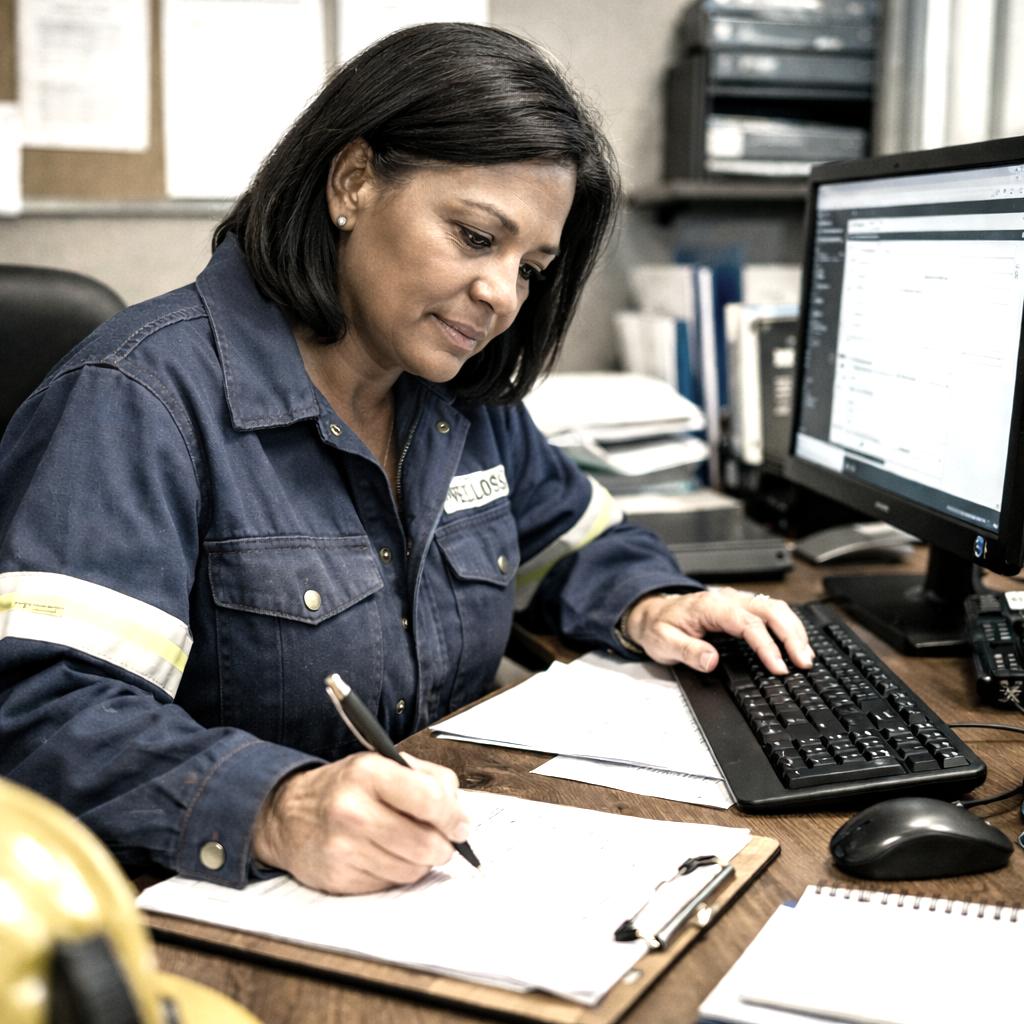
I sat with a field superintendent last year who could tell you which wells needed attention just by looking at the morning production report. Not the exceptions — the patterns between the numbers.
"That one's trending down but it's not the pump. It's paraffin. It does this every March when ground temps shift."
Twenty-two years of reading wells. He knew what SCADA couldn't tell him. He knew which roads washed out in spring. Which contractors actually showed up on time. Which lease operators needed a check-in call and which ones you could trust with a pad site for a week.
He retires in 14 months. Nobody's writing any of this down. There's no system capturing it. His replacement will have the same dashboards, the same SCADA screens, the same alert systems. And none of it will tell her what he knows.
This is what the Great Crew Change actually looks like.
The Numbers Behind the Crisis
The Bureau of Labor Statistics puts the headline number at 50% — half of the oil and gas workforce is eligible to retire by 2028. But the headline understates the problem, because not all experience is equal.
The people leaving aren't entry-level workers. They're superintendents with 20+ years of field experience. Engineers who've calibrated flow models against the same reservoir for a decade. Foremen who know which compressor station will fail next because they've heard that bearing sound before.
McKinsey estimates that tribal knowledge accounts for 60-80% of operational decisions in mature fields. That number should stop every VP of Operations in their tracks. It means the majority of your operation's real decision-making logic isn't in your SCADA system, your ERP, or your dashboards. It's in the heads of people who are about to leave.
Meanwhile, 76% of energy employers report difficulty hiring skilled field workers (GETI 2026). The pipeline of experienced replacements doesn't exist. The industry isn't just losing people — it's losing irreplaceable knowledge faster than it can be rebuilt.
The $300 Billion Blind Spot
Here's what connects the Great Crew Change to the broader digital transformation problem.
The industry invested more than $300 billion in digitization — sensors, dashboards, cloud platforms, analytics tools. All of it was built around the assumption that experienced operators would be there to interpret the data.
The SCADA system shows a pressure deviation. The dashboard flags it. The alert fires. And then what? Someone with 20 years of context looks at it and says, "That's normal for this time of year" or "That's the third time this month — call the compression crew." The entire decision architecture depends on human judgment that took decades to develop.
When that person retires, the data stays. The judgment leaves.
The companies that built their digital infrastructure around experienced operators without asking "how do we capture what they actually know?" are about to discover the most expensive blind spot in energy: systems that collect everything and decide nothing.
The Workforce Development Gap Nobody Talks About
Losing experienced workers is one half of the crisis. The other half is how the industry develops the people who replace them.
In most operations, workforce development looks something like this: a new hire gets two weeks of safety orientation, a truck key, and a route. Day three, they're alone covering 30 wells because the senior operator is buried putting out fires somewhere else. No ride-along. No mentorship. No time to ask questions because everyone's running flat out on a plan that was already wrong by 7 AM.
That's not development. That's survival. And it perpetuates the exact problem it's supposed to solve — because operators who learned by being thrown in the deep end can only teach the same way.
The root cause isn't that companies don't value training. It's that reactive operations leave no margin for it. When your schedule is chaos and your priorities change every hour, there's no room for a ride-along. There's no room for a mentorship session. There's no room for a new operator to build competence before they're making decisions alone on a lease road at 5 AM.
Throwing people in the deep end isn't a development strategy. It's a liability.
What Actually Works: Operational Design That Creates Space
The best operations I've worked with — the ones with the strongest retention AND the strongest safety records — share a pattern. Their field teams aren't working harder. They have better systems behind them.
When your daily field plan is prioritized by economic impact and your routes are optimized for geography and constraints, something interesting happens: the experienced people aren't buried in reactive firefighting anymore. They have time.
Time for a new hire to ride along and learn what the SCADA screen doesn't show them. Time for a superintendent to walk a newer crew lead through how to read the patterns between the numbers. Time for training that doesn't get bumped because something caught fire.
This is the connection most people miss: operational efficiency and workforce development aren't competing priorities. Better operations create the space that development requires.
Clear priorities create space. Space creates time for development. Development creates competence. Competence creates retention.
The operators who retain field talent aren't the ones with the biggest training budgets. They're the ones where the schedule has room — room for people to validate their knowledge, room to grow at a pace that builds real confidence, room to focus on learning instead of surviving.
Capturing What Experience Knows
The Great Crew Change can't be stopped. The retirements are coming regardless. But the knowledge loss is a design choice, not an inevitability.
The operators who are ahead of this aren't trying to document every piece of tribal knowledge into a manual. They're building systems that embed decision logic into the operation itself — scoring engines that learn from experienced operators' choices, routing algorithms that capture the patterns that took decades to develop, feedback loops that improve with every execution cycle.
When a superintendent makes a decision that deviates from the system's recommendation and the outcome is better, that's data. When an experienced operator's route consistently outperforms the optimized one in a specific geography, that's data. When the pattern between the numbers that only a 20-year veteran can see turns out to predict a failure three days later, that's data.
The goal isn't to replace human judgment. It's to capture it, learn from it, and make it available to the next generation of operators — so they don't have to spend 20 years rebuilding what the industry already knew.
The Clock Is Running
Every month, more decades of operational intelligence retire. The companies that figure out how to preserve and operationalize that knowledge will have a compounding advantage — smarter systems, faster development cycles for new hires, and better decisions at every level.
The ones that don't will spend the next decade relearning what they already knew.
The Great Crew Change isn't a future problem. It's happening right now, in every field office, across every basin. The question is whether your operation is designed to absorb the loss — or whether the retirement of your most experienced people will reveal how much of your operation was running on their judgment alone.
How is your organization preparing for the knowledge transfer? Is there a system to capture what your most experienced operators know — or will it walk out the door with them?